

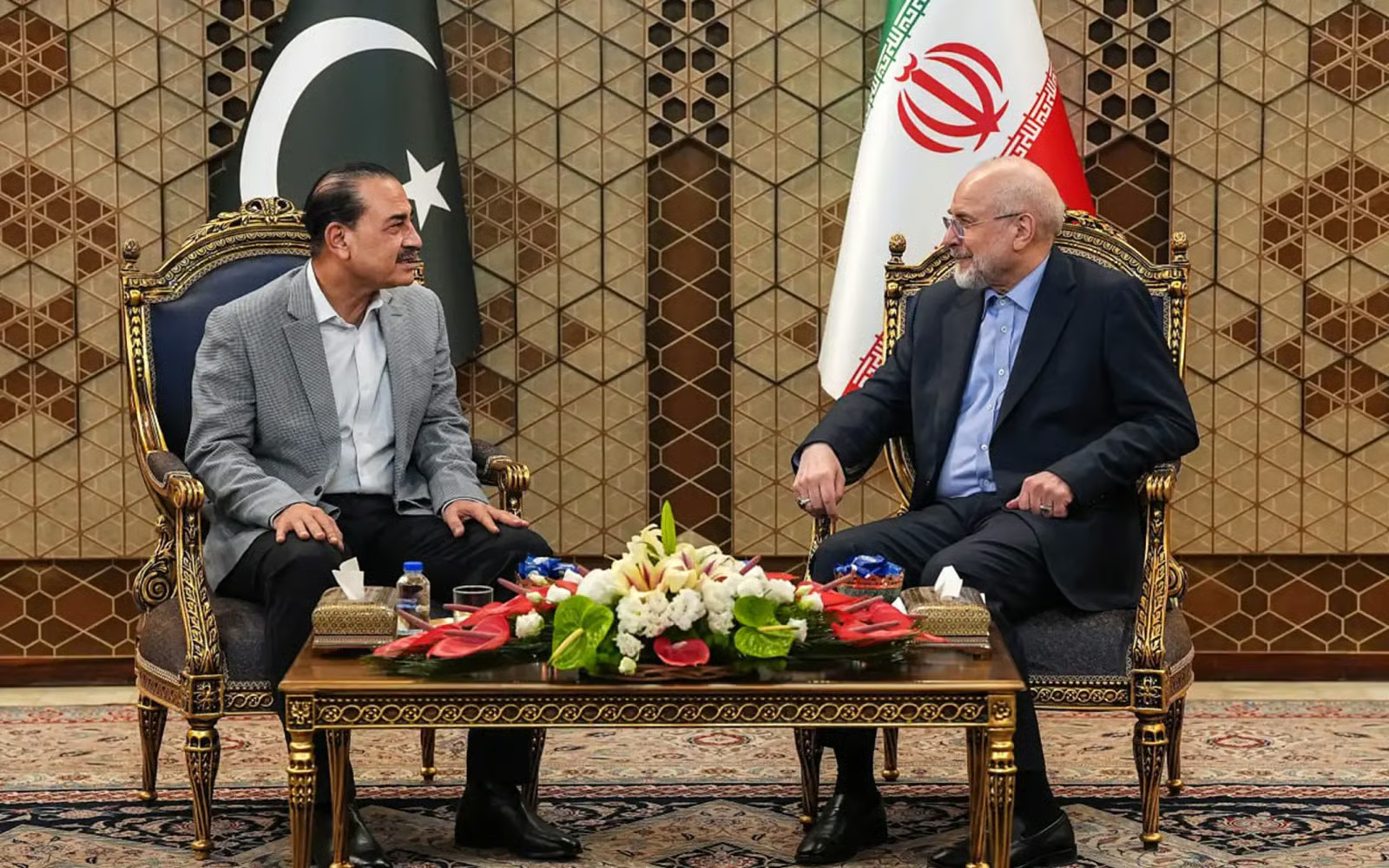
Iran’s chief negotiator Mohammad Bagher Ghalibaf has warned that Donald Trump would face a “crushing” response if the United States resumes military attacks against Iran following the fragile ceasefire that halted the recent regional conflict.
In a social media post on Saturday, May 23, Ghalibaf said Iran had rebuilt and strengthened its armed forces during the six-week ceasefire period.
“Our armed forces have rebuilt themselves during the ceasefire period in such a way that if Trump commits another act of folly and restarts the war, it will certainly be more crushing and bitter for the United States than on the first day of the war,” he said.
The warning came after Ghalibaf met with Asim Munir in Tehran as diplomatic efforts continue to prevent renewed fighting in the Middle East. Munir, who arrived in Tehran on Friday, May 22, has been engaged in talks with senior Iranian officials amid concerns that the ceasefire established on April 8 could collapse.
The conflict began after joint military strikes by the United States and Israel targeted Iran on February 28, prompting retaliatory missile and drone attacks by Tehran across the region. According to the Iranian foreign ministry, Munir held extended discussions late Friday night with Iranian Foreign Minister Abbas Araghchi.
The ministry said the talks focused on “the latest diplomatic efforts and initiatives aimed at preventing further escalation and ending” the war. Images published by the Iranian presidency also showed Munir meeting with Iranian President Masoud Pezeshkian on Saturday before another round of discussions with Araghchi.
Iranian state broadcaster IRIB described the latest meeting at the foreign ministry as expected to be a “very detailed and probably long” legal and diplomatic discussion. Iranian state news agency IRNA also reported that Araghchi held separate calls with officials from Turkey, Iraq and Qatar regarding efforts to prevent further escalation.
The foreign minister also discussed “ongoing diplomatic efforts and trends to prevent escalation of tensions and to end the war” with Omani Foreign Minister Badr Albusaidi. Oman has long served as a mediator between Iran and the United States, while Pakistan has increasingly positioned itself as an intermediary in the ongoing crisis involving Iran, Israel and Washington.
Iranian officials have accused the United States of making “excessive demands” during negotiations as Tehran reviews the latest American proposals aimed at ending the conflict. Previous direct talks hosted in Islamabad, along with weeks of backchannel diplomacy, have so far failed to produce a lasting agreement.