

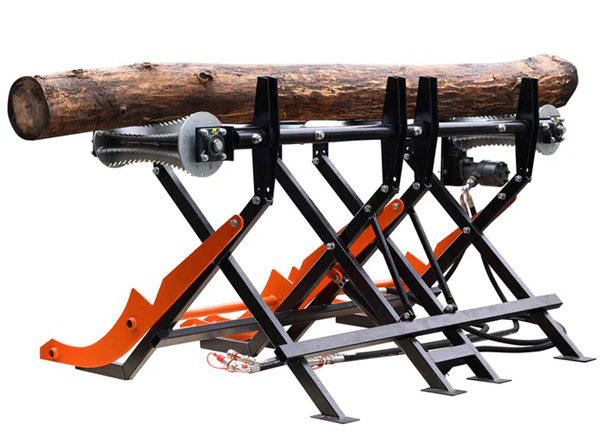
Across Canadian rural properties, wood heating is a common and cost-effective way to warm homes and workshops during long winters. Processing firewood manually involves lifting heavy logs, positioning them for splitting, and stacking the results. Repeated lifting of 80 to 100 pound logs strains the lower back and shoulders. A firewood processor with hydraulic log lift automates the most physically demanding parts of the job. This type of wood processing equipment helps landowners convert fallen trees and storm damage into usable firewood while reducing physical strain and injury risk.
During a winter in Ontario, a property owner processed 10 cords of firewood from storm-damaged trees using a hydraulic log lift. The powered lift eliminated the need to lift heavy logs manually, allowing the owner to complete the work without back strain. The owner reported that the lift paid for itself in avoided medical costs within two seasons.
Design and Operating Principles
The hydraulic log lift is designed to work alongside a standard log splitter. The operator rolls a log onto the lift platform at ground level. A hydraulic cylinder raises the platform, lifting the log to the splitter’s working height. The chain drive infeed then moves the log into the splitting position. The operator controls both the lift and infeed with levers or foot pedals, keeping hands safely away from pinch points. This two-stage process eliminates manual lifting and awkward positioning, allowing a single person to process logs that would otherwise require two people to handle.
Key features include:
- Hydraulic lifting mechanism
- Chain drive infeed for positioning
- Foot pedal or lever controls
- Compatible with most log splitters
- Steel construction for durability
Efficiency and Physical Strain Reduction
Manual firewood processing requires lifting each log multiple times: from ground to splitting surface, then again to stack. A 100 pound log handled 100 times per season places tremendous stress on the lower back. The hydraulic log lift handles all the heavy lifting, allowing the operator to focus on controlling the splitter. For a property that processes 5 cords of firewood annually, a hydraulic lift can save over 20,000 pounds of manual lifting per season. This reduction in physical strain allows homeowners to continue processing their own firewood into older age without risking injury.
Safety Practices and Operational Guidelines
Safe operation requires several key practices:
- Keep hands clear of lift mechanism
- Never exceed rated lift capacity
- Inspect hydraulic hoses for leaks before each use
- Ensure logs are stable on lift platform
- Lower lift mechanism when not in use
Advantages
- Reduces manual lifting strain significantly
- Speeds up overall processing time
- Keeps hands away from splitter during positioning
- Allows single-person operation of heavy logs
- Works with existing splitter equipment
Limitations
- Requires hydraulic connection to splitter
- Adds cost to firewood processing setup
- Requires additional floor space in work area
- Not suitable for logs longer than splitter capacity
Market Trends
As the rural population ages, demand for equipment that reduces physical strain in outdoor work is growing steadily. Hydraulic log lifts allow older homeowners to continue processing their own firewood without risking back injury. Future designs may include self-centering log positioning and wireless remote control operation. Firewood processors should evaluate hydraulic log lifts for any operation where heavy logs are handled regularly. The combination of hydraulic lifting and chain drive infeed makes this equipment suitable for diverse Canadian firewood processing applications.