


US President Donald Trump indicated that progress in talks with Iran has slowed, departing from his assertion at the start of the week that an agreement to end the war was nearly finalized.
Speaking during a Wednesday cabinet meeting at the White House alongside Secretary of State Marco Rubio and Defense Secretary Pete Hegseth, Trump noted that while Iran “wants to make a deal,” the US is “not satisfied” yet with what it is seeing, threatening that the US will “have to just finish the job” if talks fizzle out.
The conflict, which erupted on February 28 following massive US-Israeli strikes over Tehran’s nuclear program, has been under a fragile ceasefire since April 8. While Trump declared on Saturday that an agreement was “largely negotiated,” diplomacy has stalled over regional normalization demands, control of global energy corridors, and the lifting of economic blockades.

The president suggested he may not sign a ceasefire deal with Iran if neighboring Gulf countries do not normalize ties with Israel under the Abraham Accords.
“I’m not sure we should make the deal if they don’t… join the Abraham Accords,” Trump said, referring to Saudi Arabia, Qatar, Kuwait, and others, insisting they “owe it” to the US after Washington launched the war against Iran.
Trump first linked the Iran talks to the Abraham Accords on Sunday. However, Saudi officials quickly reiterated that Riyadh will only normalize ties with Israel if there is an irreversible pathway to a Palestinian state, a condition Prime Minister Benjamin Netanyahu has vowed to reject. When pressed on Wednesday if he would explicitly make the Iran deal contingent on these normalizations, Trump stepped back, replying, “I’m not going to [tell] you what’s contingent, and what’s not.”
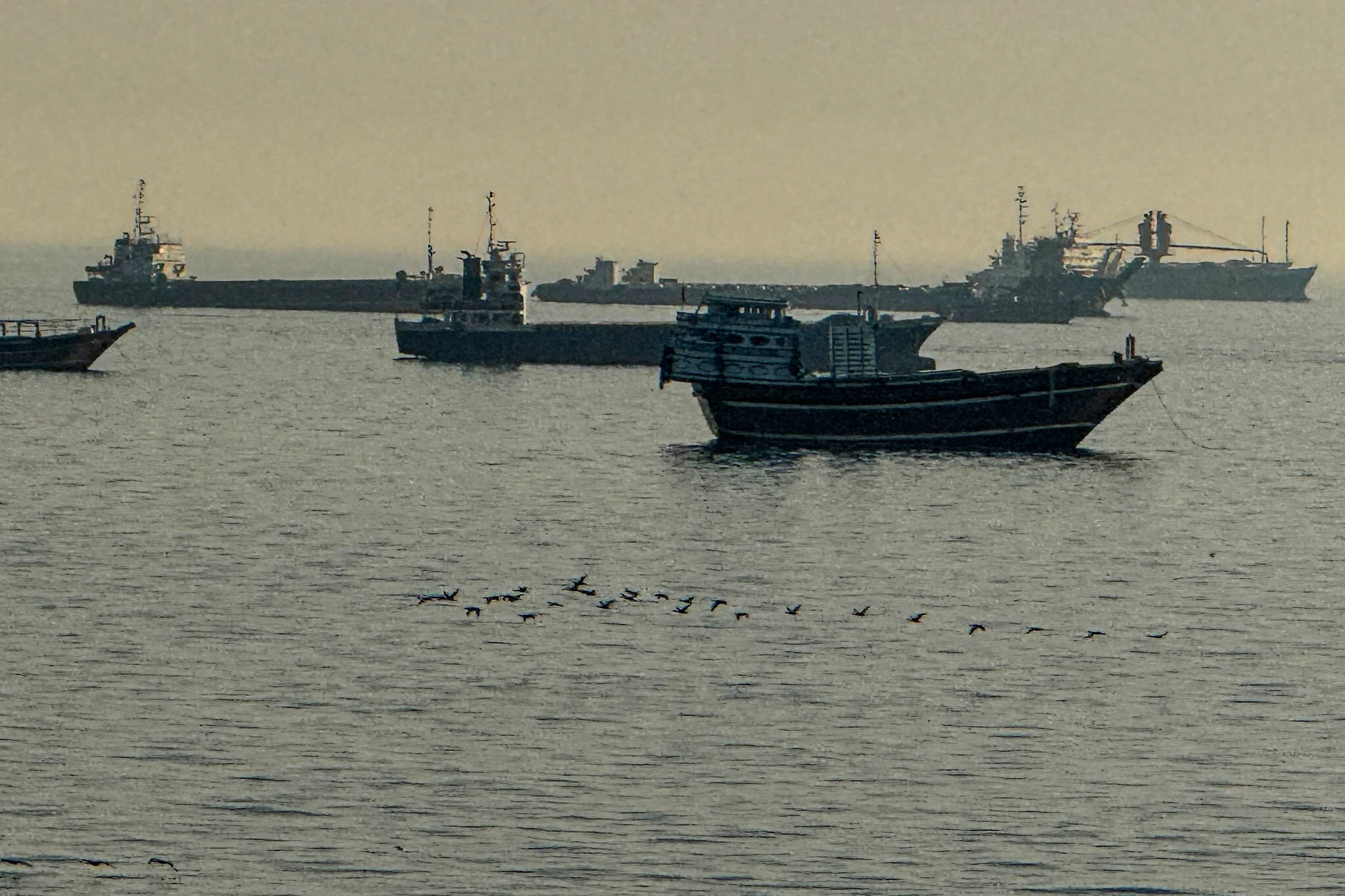
The cabinet meeting came shortly after the White House blasted an Iranian state media report as a “complete fabrication.” The Iranian report claimed a draft Memorandum of Understanding (MOU) committed the US to lifting its naval blockade, imposed on Iranian coasts since April 13, and withdrawing troops from the region. In exchange, the draft alleged Iran would gradually reopen commercial shipping through the Strait of Hormuz over a month while maintaining rights to inspect vessels and impose service fees.
Trump explicitly rejected those terms on Wednesday, insisting that the strategic waterway must open completely and without delay.
“No, the strait is going to be open to everybody… It’s international waters. Nobody’s going to control it. We’re going to watch over it,” Trump said, adding that “one of the things that will happen is the strait will open immediately.”
Trump also issued a harsh warning to Oman, a traditional backer of regional mediation, regarding control of the waters: “Oman will behave just like everybody else, or we’ll have to blow them up. They understand that, and they’ll be fine.”
Despite the slowdown, US officials maintain that a diplomatic resolution remains the priority, though they have not ruled out a return to active hostilities.
Secretary of State Marco Rubio noted that “some progress” has been made, adding, “We’ll see over the next few hours and days whether progress could be made.” Rubio reiterated that the administration prefers a diplomatic path to prevent Iran from obtaining a nuclear weapon, but warned that Washington has “other options available.”
Defense Secretary Pete Hegseth attributed Tehran’s presence at the negotiating table to military weakness following the joint US-Israeli offensive. “They may have missiles, but they can’t build more right now,” Hegseth said, touting the ongoing naval blockade. “No Iranian tanker around the globe is safe… choking off their economic lifeblood.”
Trump refused to confirm whether the current framework defers long-term talks on Iran’s enriched uranium stockpiles to a subsequent negotiation. He concluded by stating, “We can make a good deal right now, but maybe not a great deal,” reiterating that he intends to hold out for the latter.