

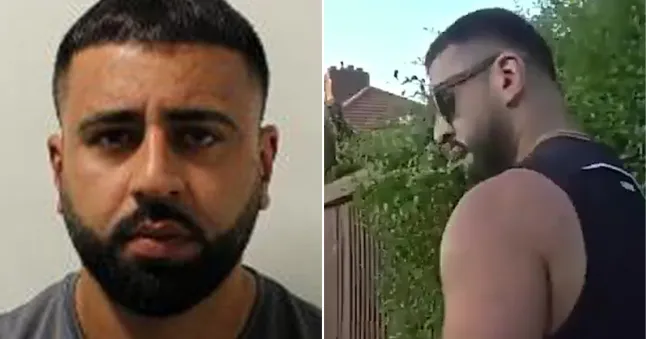

A 32-year-old man who used artificial intelligence to create indecent images of children from photographs he secretly took has been jailed for two years and four months. Zafer Dogan was sentenced at Wood Green Crown Court in London after admitting a series of offences involving indecent images of children and other illegal material.
Dogan pleaded guilty at Highbury Magistrates’ Court on August 6 to three counts of making indecent images of a child. The offences involved 653 Category A images, the most serious classification, 294 Category B images and 900 Category C images. He also admitted two additional counts of making indecent photographs of a child, possessing extreme p0rnography, possessing a prohibited image of a child, creating purported intimate images of an adult and obstructing a police officer in the execution of their duty.
Police said Dogan took more than 5,000 photographs, including images of girls playing outside, travelling to and from school and walking with their parents. He also followed women in the surrounding area and photographed them without their knowledge. Investigators said he then used AI software to digitally remove clothing from some of the photographs. Police found manipulated images involving 33 women and two girls aged seven and 13.
Dogan was arrested on July 16 after throwing his phone into a neighbour’s garden. Police dogs subsequently recovered the device. Investigators found about 1,800 indecent images of children on the phone, as well as extreme p0rnographic material, including images involving bestiality. Police said many of the people appearing in the material have not yet been identified and appealed for anyone who may have seen Dogan filming or taking photographs to come forward.
The case also prompted criticism over the decision to grant Dogan bail before sentencing. Despite prosecutors opposing his release, Dogan was granted bail on several occasions and permitted to return to his flat in Enfield, north London. Police said he had taken many of the photographs from his bedroom window overlooking an area used by children.
One family affected by his offending eventually moved into temporary accommodation because of concerns about continuing to live close to him. The mother of the 13-year-old girl told the court that the experience had left her feeling as though she had been “punched in the gut”.
“I feel like we’re on the run, yet we’re not the s3xual offenders,” she said. “Dogan is just living the same life while our lives have been changed forever. “How can a court put him back so close to his victims?” In a statement read by prosecutor Sarah Gabay, the mother of the seven-year-old girl said she had also been desperately trying to move to protect her daughter.
“It doesn’t seem fair that because he’s a paedophile and chose to exploit my daughter, that my daughter, a victim, has to change everything. How is that fair? She’s done nothing wrong,” she said. London Victims’ Commissioner Andrea Simon criticised the handling of Dogan’s bail, saying the victims and their families had been “grossly failed”.
She said police and prosecutors had opposed bail several times but Dogan was nevertheless returned to the community, raising concerns about whether pressures on the justice system were being adequately balanced against victims’ safety. Metropolitan Police Commissioner Sir Mark Rowley also described the decision to release Dogan on bail near his victims as “unfathomable”.
“A victim and their family found themselves living in close proximity to a man who had admitted targeting them,” Rowley said. “They were so fearful, they ultimately felt forced to move to distant temporary accommodation, disrupting their lives and disrupting their children’s lives, simply to escape being in the neighbourhood of the offender.” Rowley also called on artificial intelligence companies to strengthen safeguards preventing their technology from being used to facilitate s3xual offending and create abusive material.
A government spokesperson described Dogan’s offences as “awful crimes” and said bail decisions should take account of the need to protect victims, witnesses and the public. The spokesperson also pointed to legislation targeting AI tools designed to produce child s3xual abuse images and websites used to distribute such material.
During sentencing, the judge described the images found in Dogan’s possession as “chilling”, saying his victims had been going about their everyday lives when he secretly photographed them. “All of them were completely unaware you had surreptitiously taken photographs, no doubt for your s3xual pleasure,” the judge said.
The judge rejected the possibility of suspending Dogan’s prison sentence, saying doing so would amount to “utterly failing” his public duty. Dogan’s lawyer, Joseph Carr, apologised to the victims and their families on his behalf and told the court that Dogan was remorseful. The defence also said the AI-generated images had not been shared.
Dogan’s family has been ordered to leave the home where they have lived for about 30 years and is expected to move out.
Metropolitan Police Constable Natalie Scagliarini described the case as “deeply distressing” and Dogan’s behaviour as “predatory and dangerous”, while thanking those affected for their cooperation with the investigation.