

Politics

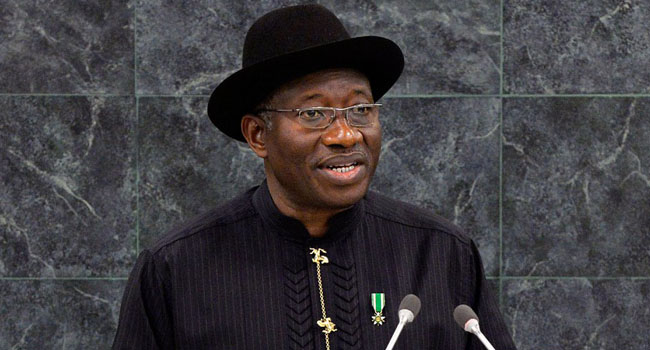
Former President Goodluck Jonathan has warned that growing political intolerance and violence could threaten Nigeria’s 2027 general elections, accusing some political organisations of running their campaign teams like cult groups.
Jonathan spoke on Tuesday, November 17, in Abuja at a peace and security conference organised by the Goodluck Jonathan Foundation. The event was themed “Safeguarding Peace and Strengthening Social Cohesion in a Competitive Political Environment”.
“As we gradually approach the 2027 general elections, certain developments in our political environment are becoming increasingly worrisome,” he said. “As a former president, I receive calls from Nigerians and friends of our country across the world who express concern about the direction Nigeria is heading.”
He said those concerns reflected growing anxiety about possible crises after the elections and urged political leaders not to dismiss them. “Rather than the confidence and optimism we should be inspiring, there is growing apprehension about the likelihood of crises that may follow the elections. We must not ignore these concerns,” Jonathan said.
The former president identified political intolerance as an urgent problem, saying some politicians were increasingly unwilling to accommodate opposing views or recognise the right of others to seek public office. “This is compounded by political thuggery, the exploitation of our young people as instruments of violence, and acts of political brigandage,” he said. “It’s becoming obvious. We are running political organisations — campaign teams as cult groups.”
Jonathan also expressed concern about conflicting court decisions, particularly those delivered by courts of equal jurisdiction. He said such judgments could weaken public confidence in the judiciary and heighten political tension.
“While the judiciary has the constitutional responsibility to interpret the law and adjudicate disputes, conflicting decisions on similar matters can undermine public confidence in the institution and create unnecessary tension,” he said. “We must protect the integrity and independence of our judiciary. When citizens begin to lose faith in the courts and resort to self-help, the consequences can be disastrous. The descent from a loss of confidence in institutions to anarchy is a danger we must collectively prevent.”
He warned against allowing electoral competition to become a source of destructive ethnic rivalry at either the national or state level. “Nothing could be more dangerous to our national existence than the deliberate encouragement of ethnic rivalry,” Jonathan said. “We must never allow political ambition to undermine the bonds that hold us together as one nation and in our states.”
The former president urged Nigerians to place competence and credibility above ethnic, religious and other considerations when choosing leaders. Recalling remarks he made recently in Lagos, he said the country needed to review how it selected people for public office. “Our present system remains vulnerable to ethnic, religious and other primordial considerations, which often prevent competent and credible individuals from emerging as leaders,” he said.
Jonathan said voters needed to be deliberate about the quality of candidates they elected at both federal and state levels, stressing that leadership would determine the country’s future. “Let us choose competence over prejudice, service over personal ambition, and national interest over narrow considerations,” he said. “Our democracy must produce leaders capable of uniting our people and advancing our collective development.”
The keynote speaker, former ECOWAS Commission president Omar Touray, said the 2027 elections offered Nigeria an opportunity to demonstrate that a large and diverse society could strengthen democracy while preserving national unity. He said Nigeria’s population, economic influence, diplomatic weight and strategic importance meant the outcome of its electoral process would have implications beyond its borders.
“A peaceful, transparent and credible electoral process in Nigeria would reinforce confidence in democratic governance across the continent,” Touray said. He described Jonathan’s decision to accept defeat before the final results of the 2015 presidential election were announced as an “enduring example of democratic statesmanship”.
Former Vice-President Namadi Sambo said democracy depended on trust, mutual respect, credible institutions and public confidence in the political process. Sambo said political competition was essential to democracy but must not be allowed to weaken institutions, undermine Nigerians’ shared identity or threaten the country’s unity and stability.