

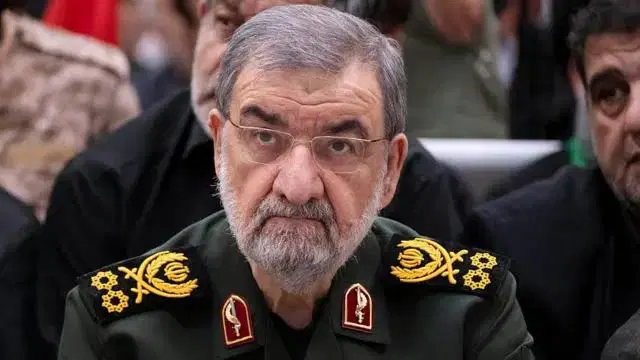
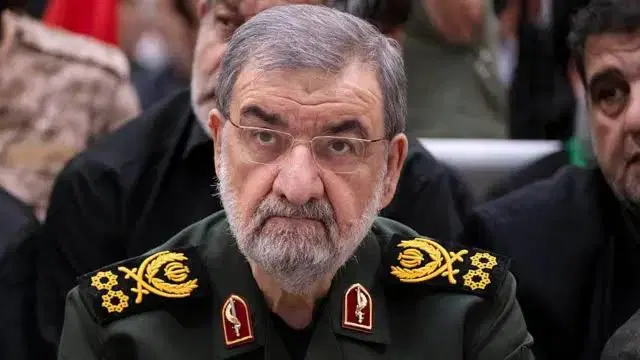
Iran stated on Saturday, October 31, said that the diplomatic tone of the United States has “completely changed” as Washington seeks to revive formal negotiations with Tehran.
While the U.S. and Israel have maintained military threats, U.S. Vice President JD Vance transmitted a letter to Iranian officials in recent days aimed at restarting diplomatic talks.
“I read the letter. I haven’t yet responded. Their tone has completely changed,” Mohsen Rezaei, the head of Iran’s Supreme National Security Council, said during a televised broadcast on Iranian state television.
Rezaei characterized the shift in rhetoric as a positive development, asserting it demonstrated that Iran had “consolidated its victory”.
He noted that he has not sent a formal reply to Washington and declined to provide further details regarding the contents of the letter.
The developments coincide with ongoing indirect mediation efforts led by Qatar. However, Iranian officials reiterated earlier on Saturday that they currently have no plans for direct bilateral meetings with U.S. representatives.
For seven long years, Chika Ekezie lived in the shadowy grip of self-denial. Battling recurring bouts of fever, pneumonia, night sweats, and rapid weight loss, the Imo State native routinely brushed off his deteriorating health, relying on quick over-the-counter fixes from local pharmacies rather than seeking proper medical diagnosis.
When he finally visited a hospital, the diagnosis hit him hard: he was living with HIV.
Looking back in an interview with Punch Newspaper, Ekezie candidly separates his past choices into carelessness and recklessness. While his carelessness lay in ignoring clear warning signs from his body, his recklessness stemmed from a promiscuous lifestyle with multiple sexual partners.
Yet, as Ekezie soon discovered, the virus itself was not his heaviest burden, it was the crushing weight of public stigma.
At the time of his diagnosis, Ekezie was working for a magazine publishing firm in Lagos. Noticing his frequent illnesses, his employers offered to pay for a medical checkup at a recommended clinic.
Because the company funded the evaluation, Ekezie handed his test results to management around 10:00 a.m. By 4:00 p.m. that same afternoon, he was abruptly handed his walking papers under the guise that the firm was “renovating its premises.”
Devastated, he boarded an overnight bus to Abuja that very evening. But the news traveled faster than he did. The colleague who had originally recommended him for the job shared his status with others, setting off a chain reaction of gossip. By the time Ekezie stepped off the bus in Abuja, his family and community already knew.
The hostility was swift and unrelenting. In his hometown, church members ostracized his late mother, holding committee meetings behind her back. Customers boycotted his brother’s tailor shop, demanding their clothes back. Cousins cut ties, and close acquaintances began treating him like a complete stranger.
“Stigma hurts most when it comes from people and places where you expect to find support. The church, hospital, and home can all become sources of stigma. It can come from family members, doctors, nurses, pastors, and fellow church members. I had to stop going to church at some point because the stigma became too much.”
Without therapy or a strong support system, Ekezie spent seven years refusing antiretroviral treatment. He avoided committed romantic relationships, preferring paid encounters out of shyness and deep denial.
Eventually, a sobering realization forced him to look in the mirror.
“I had to look at myself in the mirror and say, ‘Chika, now that you have HIV and are not on medication, if you are going to have sex, it is not just about the people you could put at risk. You are also putting yourself at risk.’ I realized I needed to take responsibility for my health, start treatment, and become more careful.”
His true turning point came during an emergency hospital admission after years of non-adherence to treatment. While lying in a hospital bed, Ekezie stumbled across a video on TikTok explaining that untreated HIV typically progresses to AIDS within five to eight years.
Convinced his time was running out, he decided to use whatever days he had left to speak out and help others.
“I thought, ‘If I am going to die, let me not die empty. Let me know that I helped a lot of people.’ I did not start speaking publicly because I wanted to save people. I genuinely thought my time was almost up and wanted to make a difference before I died.”
A viewer moved by his early posts encouraged him to give medical treatment another chance. Ekezie agreed, and everything changed.
In Nigeria, HIV antiretroviral therapy (ART) is provided free of charge. Within less than a year of consistent treatment, Ekezie achieved an undetectable viral load.
“Being undetectable means that the amount of HIV in my body has been reduced to a level that cannot be detected by a standard viral load test. When someone living with HIV takes medication consistently and maintains an undetectable viral load, they cannot sexually transmit HIV to another person. Knowing that… gives me peace of mind.”
His physical health transformed rapidly; he regained healthy weight, his skin cleared, and his energy returned. In November 2024, Ekezie formally stepped into the public spotlight as an open advocate, using social media and media appearances to dismantle harmful myths surrounding the condition.
Ekezie continuously battles two widespread societal misconceptions: that HIV is an automatic death sentence, and that a positive diagnosis marks the end of one’s personal and professional potential.
“People living with HIV can be bankers, chief executives, politicians, senior professionals, and pastors. Having HIV does not mean your life has ended. Unfortunately, images used to represent people living with HIV often show them looking extremely thin, weak, and sick… That is why I live openly on social media. I want people to understand that someone living with HIV can look healthy and lead a fulfilling life with proper treatment.”
To anyone receiving a new diagnosis today, Ekezie offers a message grounded in his own nine-year journey from secrecy to strength:
“Do not allow HIV to define your life. Take your medication, remain on treatment, and allow yourself to live fully. HIV does not have to determine your future. You have what it takes to make the best of your life.”