

For more than three decades, the Women’s Africa Cup of Nations had always ended with Nigeria’s Super Falcons somewhere near the medals. Not this time.
Nigeria arrived in Morocco as defending champions, carrying a record 10 WAFCON titles and the weight of a footballing dynasty that had survived generations of challengers, but on Sunday in Casablanca, that dynasty finally hit a wall.
Cameroon defeated Nigeria 1-0 in the quarter-finals, ending the Super Falcons’ title defence, ending their hopes of another medal and, for the first time in their history, sending them home from the WAFCON before the semi-finals.
The result means Nigeria will not compete for a medal at the tournament for the first time ever.
And the significance goes even deeper.
This is the first time the Super Falcons have ever been eliminated in the WAFCON quarter-finals.
The Indomitable Lionesses have not simply beaten Nigeria.
They have rewritten the history of African women’s football.
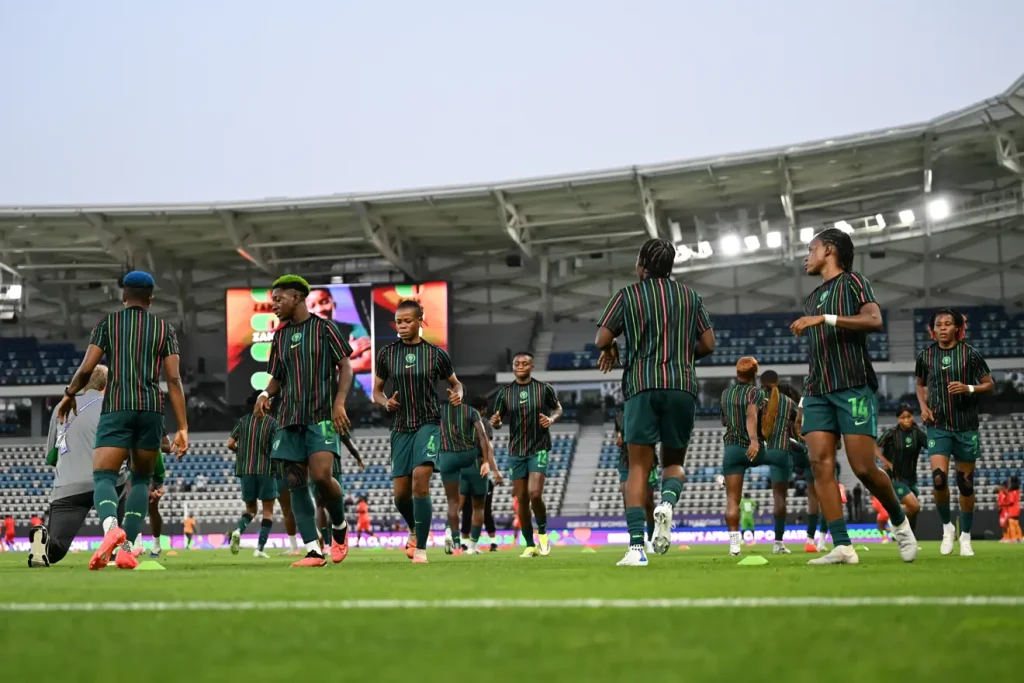
For the First Time, Nigeria Will Not Play For a Medal
Nigeria’s elimination carries enormous historical significance. The Super Falcons have dominated the WAFCON like no other team.
They have won 10 titles, making them the undisputed record champions. They had also reached the latter stages with remarkable consistency, but this time, there will be no semi-final.
No medal.
No title defence.
No chance of an 11th crown.
For the first time since the competition began, Nigeria have failed to reach the semi-finals.
And for the first time, the Super Falcons have been eliminated at the quarter-final stage.
A new champion will therefore be crowned in Morocco.
The Night Nigeria’s Dynasty Finally Cracked
Nigeria had entered the tournament with one clear objective: defend their crown and add an 11th WAFCON title to their extraordinary collection.
However, that campaign quickly became complicated.
A stunning 3-2 defeat to debutants Malawi in their opening match immediately put the champions under pressure.
They responded with a gritty 1-0 victory over Zambia while playing most of the match with 10 players before demolishing Egypt 6-2 to reach the knockout stage.
The six-goal performance appeared to signal that the Super Falcons had rediscovered their championship rhythm.
Then Cameroon arrived.
And suddenly, everything Nigeria had built throughout the tournament was at stake.
Not just a place in the semi-finals.
Not just the title.
History.
Cameroon Land the Defeat Blow
The Indomitable Lionesses knew they would have to produce something special against a Nigerian side that had dominated this fixture for years.
They did exactly that.
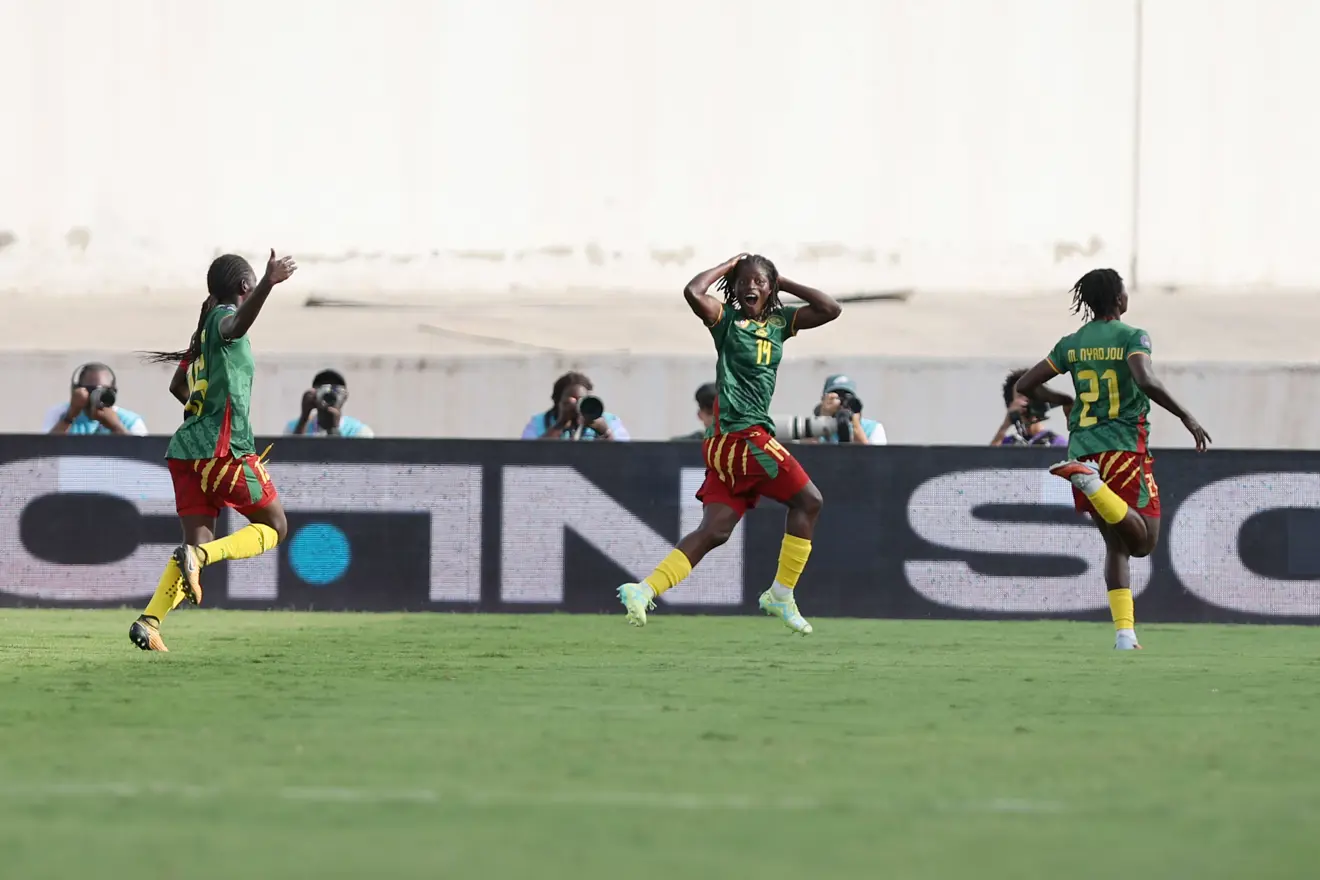
The breakthrough came in the 19th minute.
Twenty-year-old Myriam Maéva Nyadjou received the opportunity to test Nigeria from distance and unleashed a thunderous strike.
The ball flew into the top corner, beyond the outstretched hand of Super Falcons goalkeeper Chiamaka Nnadozie.
There was nothing the Nigerian goalkeeper could do.
Cameroon had the lead.
And for the first time in the match, Nigeria were staring at something they rarely experience at this stage of this competition:
ELIMINATION.
Nigeria Almost Respond Immediately
The Super Falcons tried to answer straight away.
Just a minute after Cameroon’s opener, captain Rasheedat Ajibade delivered a dangerous cross into the penalty area.
Gift Monday was unable to make clean contact, however, after the initial effort had been dealt with.
Nigeria continued to press.
In the 28th minute, Rinsola Babajide delivered into a dangerous area and found Jennifer Echegini in a promising position.
Echegini’s effort, however, was saved.
The chances were arriving.
The equaliser simply refused to come.
Cameroon absorbed the pressure, stayed organised and carried their precious 1-0 advantage into halftime.
Bihina Becomes Cameroon’s Wall
Nigeria returned from the break with renewed urgency.
They knew 45 minutes stood between them and an unprecedented early exit, but Cameroon had another obstacle waiting.
Goalkeeper Michaely Bihina.
The Cameroonian shot-stopper produced one of the defining moments of the match in the 70th minute.
Nigeria worked an opportunity for Uchenna Kanu, who rose to meet a powerful header.
It appeared destined for the net.
Bihina had other ideas.
She stretched out a strong hand and somehow kept the ball out, preserving Cameroon’s one-goal advantage.
It was a save that suddenly began to feel like a semi-final-saving moment.
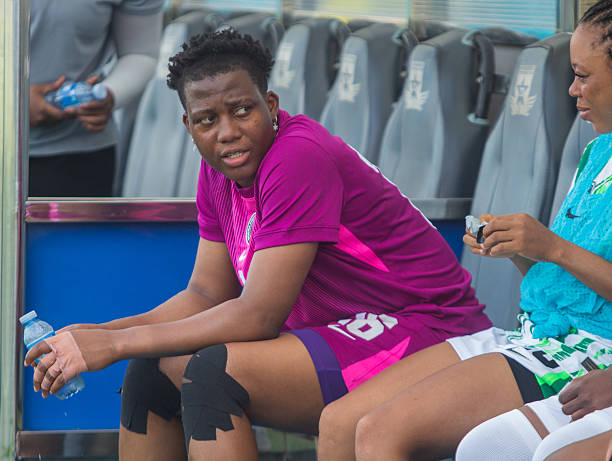
Nnadozie Keeps Nigeria Alive
Cameroon almost doubled their lead six minutes from full time.
Achta Toko Njoya stood over a free-kick from a tight angle and struck it with real venom.
Nnadozie reacted quickly, getting across to tip the effort over the crossbar.
Nigeria were still alive but time was disappearing.
The Final Desperate Push
The defending champions threw everything forward.
The midfield pushed higher.
The defenders joined the attack.
Every Nigerian touch seemed to carry the weight of an entire nation desperate to avoid history.
Then substitute Esther Okoronkwo found space.
She used her pace to beat her marker before cutting onto her left foot.
The equaliser was there but her effort drifted agonisingly wide of the post.
That was it.
Cameroon held their nerve through the final minutes.
The whistle sounded.
Cameroon 1-0 Nigeria.
The Lionesses celebrated.
The Super Falcons collapsed in disappointment.
And African football witnessed something it had never seen before.
Cameroon Finally Break the Nigerian Barrier
Perhaps no opponent understands the magnitude of this victory better than Cameroon.
Nigeria and Cameroon have shared one of the greatest rivalries in African women’s football.
Before Sunday’s meeting, the nations had faced each other 13 times at the WAFCON since 1998.
Nigeria had dominated the fixture.
The Super Falcons had won nine times in open play, with two further victories coming on penalties.
Cameroon had won only once, while another encounter ended in a draw without a shootout.
Cameroon’s only previous victory came in 2012, when Gaelle Enganamouit’s lone goal helped the Indomitable Lionesses defeat Nigeria and eventually finish third.
Now they have another victory over the Super Falcons.
And this one means infinitely more.
The Heartbreak of 2016 Finally Gets an Answer
For Cameroonians, there is also an emotional layer to this victory.
The 2016 WAFCON final in Yaoundé remains one of the most painful nights in Cameroonian women’s football history.
Playing before a packed Ahmadou Ahidjo Stadium, the hosts believed they had finally found the moment to defeat their neighbours in the biggest match of the tournament.
Instead, Desire Oparanozie scored in the 86th minute, handing Nigeria an eighth WAFCON title.
Cameroon have waited years for another opportunity.
On Sunday, they finally got it.
And this time, there was no late Nigerian rescue.
Cameroon Embraced the Underdog Tag
Before the quarter-final, Cameroon’s head coach Valentine Nguele openly acknowledged Nigeria’s superiority on paper.
“We have a great match upon us. A big quarterfinal. It is an important match for us and we are ready.”
“We must admit that Nigeria is a great football team. They are the favourites.”
“They have won the title 10 times. We need to accept that,” Nguele said.
But the Cameroon coach was not interested in allowing history to dictate the future.
“I like to think about the present. We are now here in the quarterfinals. We are in the correct head space.”
“We got a second chance to play at the tournament because it was expanded [from 12 to 16 teams].”
“Thank God for this opportunity to play in this WAFCON. This is an opportunity for us to do our best.”
“Reaching the last eight is a bonus for us.”
That “bonus” has now become something much bigger.
Cameroon are in the semi-finals.
And they have booked their place at the 2027 FIFA Women’s World Cup in Brazil.
Cameroon Had already Been Warning Everyone
The Indomitable Lionesses had quietly built an impressive campaign before facing Nigeria.
They topped Group D with seven points from three matches.
Their results included:
- Cameroon 2-1 Mali
- Cameroon 1-0 Ghana
- Cameroon 1-1 Cape Verde
They scored four goals and conceded only two.
Their defence had already suggested that they would not be easy to break down.
Against Nigeria, that defensive organisation became the foundation of one of the greatest victories in their history.
Nguele had insisted beforehand:
“Against Nigeria, we shall play our natural style of football. We need to enjoy the match.”
“We shall not put pressure on ourselves. We shall go out there have fun.”
And they did but they also made history.
The Cameroonian coach had also pointed towards Malawi’s shock victory over Nigeria in the group stage as evidence that the gap in African women’s football is closing.
“Many things have changed. Every team is coming to win. There is a lot of improvement in Women’s Football in Africa.”
“It will be a great pleasure to play against Nigeria on Sunday.”
Those words now sound prophetic.
Malawi shocked Nigeria in the group stage.
Cameroon finished the job in the quarter-finals.
And Nigeria’s reign is over.
Cameroon defender, Colette Ndzana also understood what the match represented.
Having lost to Nigeria in the final of the 2019 African Games in Rabat after a penalty shootout, she entered the quarter-final determined to change the story.
They broke the barrier.
Cameroon now Chase a Historic Semi-final
Sunday’s victory sends Cameroon into their 11th WAFCON semi-final.
They had previously failed to reach the last four only in 2000 and 2022.
They are also now guaranteed a place at the 2027 FIFA Women’s World Cup, giving the victory an even greater significance.
The Indomitable Lionesses had previously appeared at the Women’s World Cup in 2015 and 2019.
Now Brazil awaits in 2027.
And Nigeria? A painful New Chapter Begins
For the Super Falcons, there is no hiding from what this defeat means.
Nigeria came to Morocco as defending champions.
They came with 10 titles.
They came with a reputation for surviving when everything appeared lost.
They even survived their own disastrous start to this tournament but the fight finally ended against Cameroon.
There will be no medal.
No semi-final.
No 11th title.
And, for the first time in WAFCON history, Nigeria’s tournament journey ends in the quarter-finals.
The Super Falcons have spent decades setting the standard for everyone else.
Now, for the first time, they will watch the rest of Africa fight for the crown from home.
A new champion will be crowned in Morocco.