

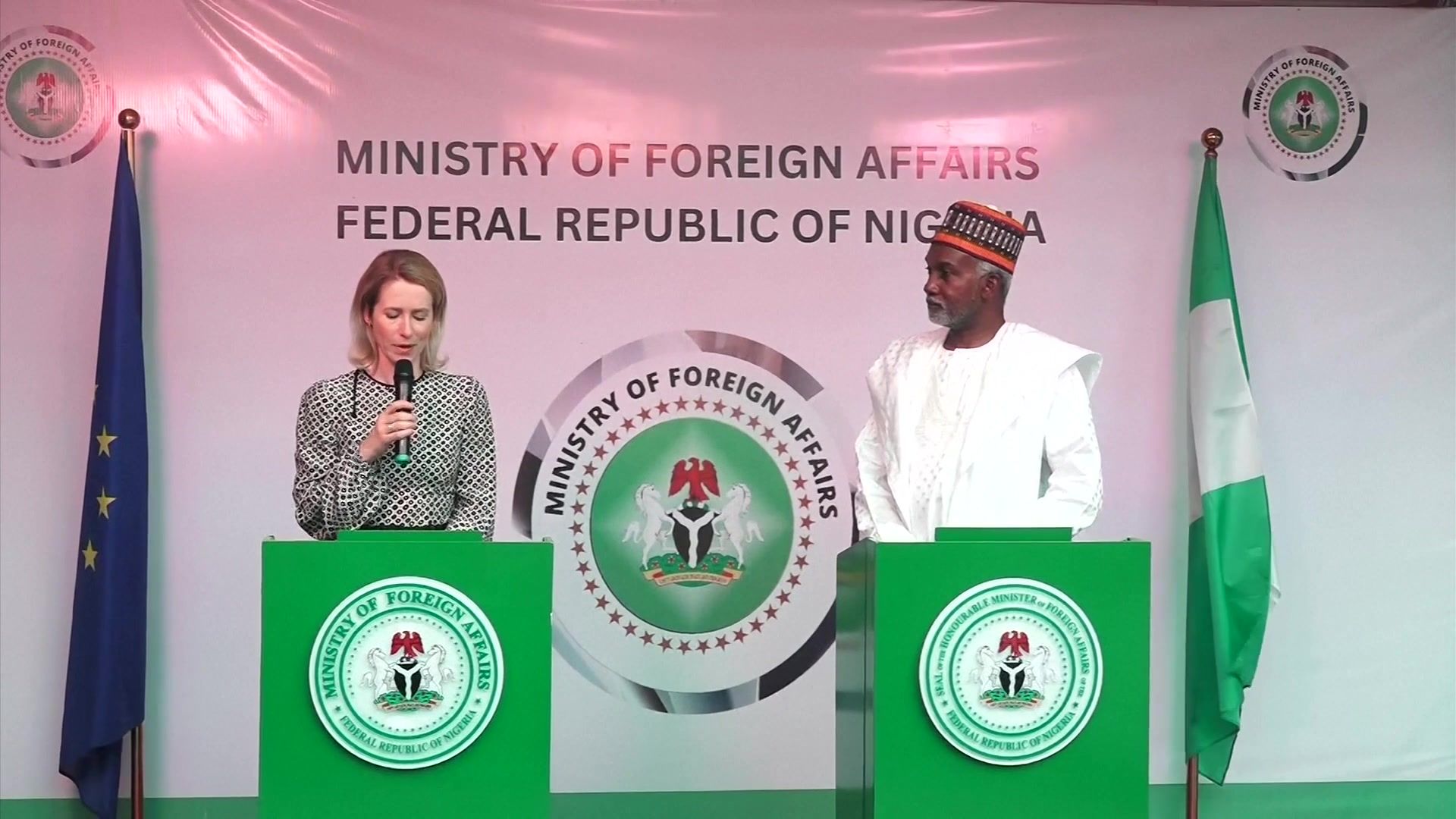

The European Union has unveiled a €290 million investment package for Nigeria, targeting key sectors including digital infrastructure, healthcare manufacturing, agriculture, and migration management.
The announcement was made during the eighth Nigeria–EU ministerial dialogue in Abuja, co-chaired by Yusuf Tuggar and Kaja Kallas. European officials said the funding, part of the EU’s Global Gateway strategy, is designed to strengthen Nigeria’s economy and deepen bilateral cooperation.
The digital sector received the largest allocation, with €131 million set aside to expand connectivity and improve digital services. The initiative aims to deploy about 90,000 kilometres of fibre-optic cable, providing internet access to roughly 33 million Nigerians.
The programme will also support digital public infrastructure and develop Nigeria’s tech talent pipeline. In the healthcare sector, the European Investment Bank and the Bank of Industry Nigeria signed a €50 million financing agreement to boost local manufacturing of pharmaceuticals, vaccines, diagnostics, and medical devices.
Managing Director of BoI, Olasupo Olusi, described the deal as transformative, saying: “This partnership marks a pivotal step in Nigeria’s journey from being a major importer… to becoming a competitive producer.” EIB Vice-President Ambroise Fayolle added: “We support national health security while improving the resilience of supply chains.”
Another €85 million agreement will support agricultural value chains, particularly cocoa and dairy production, with funding aimed at improving productivity and supporting smallholder farmers and agribusinesses.
EU Commissioner Jozef Sikela said the investment would help Nigeria reduce reliance on imports and scale local production capacity.
The package also includes €16 million for migration management, focusing on reintegration of returnees and efforts to combat human trafficking. Kallas emphasised the broader significance of the partnership, stating: “In the current geopolitical context, the European Union is keen to enhance its partnership with Nigeria.”
Officials noted the investments align with continental goals such as the African Union target of producing 60 percent of vaccines locally by 2040, and the African Continental Free Trade Area framework for regional trade.
The EIB also revealed it has invested over €2.3 billion in Nigeria since 1978, supporting infrastructure, climate resilience, innovation, and small business development.