


A wounded American airman stranded deep inside hostile territory in Iran triggered a high-risk rescue mission as US forces raced against time to extract him before advancing enemy fighters could capture him.
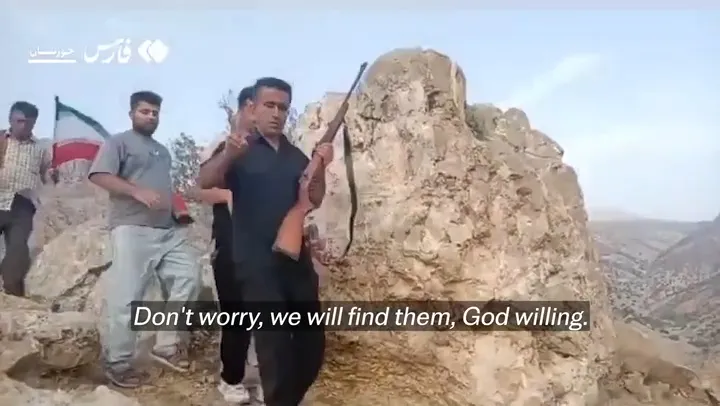
The officer, a weapons systems operator flying an F-15 fighter jet, ejected over southwest Iran after his aircraft went down. Injured and alone, he navigated harsh mountainous terrain, eventually hiding in a narrow crevice while armed local fighters searched for him, reportedly motivated by a reward for his capture.
Despite a damaged leg, the airman relied on Survival, Evasion, Resistance, and Escape (SERE) training to stay hidden during what became a 36-hour manhunt.
Former Royal Air Force pilot and security specialist Mikey Kay described the urgency of the situation, saying: “This was a race for time and literally every second counted. As time goes by, there is an exponential decay of success.”
As the threat intensified, the United States deployed significant military assets to locate and extract the officer. The operation involved multiple aircraft, including AC-130 gunships, A-10 Warthogs, MH-6 attack helicopters, and surveillance drones, alongside special forces teams.
Kay explained the scale of the response: “The idea of the weapons systems operator getting into the hands of the Iranians clearly really did focus the minds of the Pentagon.” Iranian forces, including members of the Islamic Revolutionary Guard Corps (IRGC), were closing in rapidly, supported by drones, radar systems, and surface-to-air missile capabilities.

“The Iranian forces got within about two miles of the downed weapons system operator,” Kay said, highlighting how close the search teams came. To buy time, US intelligence reportedly launched a misinformation campaign, spreading rumours that the airman had already been captured and moved, in an effort to disrupt the search.
Meanwhile, efforts to locate him were complicated by terrain, as his emergency beacon signal was weakened by his position in a ravine. Intelligence teams were eventually able to geolocate his position and relay coordinates for extraction.
Once confirmed, special operations forces launched a combat rescue mission. Helicopters flew in at low altitude while jets and gunships secured the area, mitigating threats from fighters equipped with man-portable air defence systems (MANPADS).
“MANPADS can be an absolute nightmare for aviation assets trying to locate a downed airman,” Kay noted. Commandos reached the airman, verified his identity using secure protocols, and evacuated him by helicopter to Kuwait for medical treatment.
In a final complication, two US aircraft involved in the operation became stranded in sand at a remote air base. Additional planes were dispatched to recover personnel, and the stranded aircraft were destroyed to prevent sensitive equipment from falling into enemy hands.
“Those aircraft have a lot of very sensitive equipment capability on them,” Kay said, explaining the decision to destroy them. The mission ultimately succeeded in rescuing the airman despite the intense risks and rapidly closing threat.