

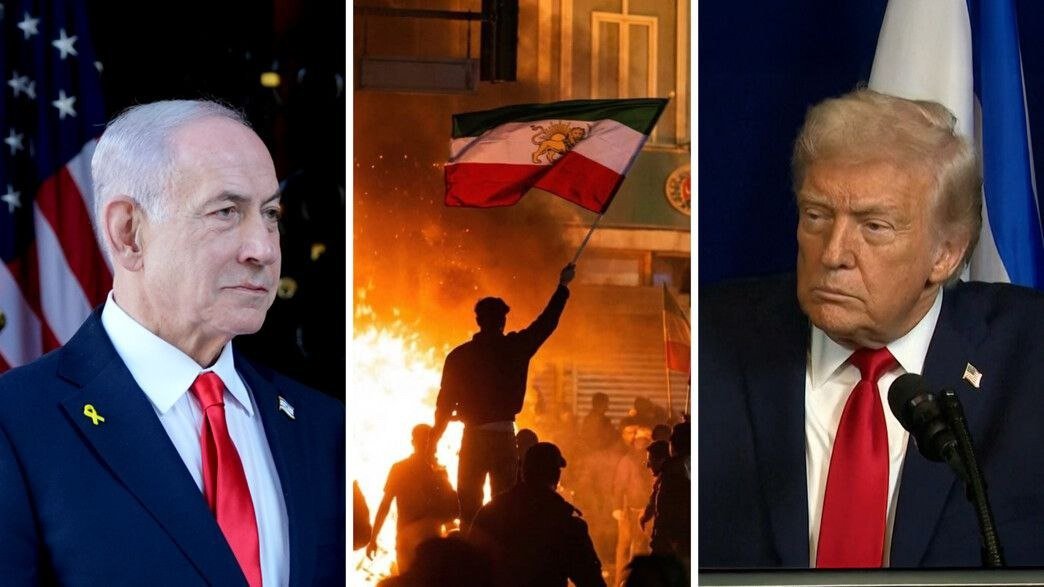
Israel said it carried out a “pre-emptive” military operation against Iran early Saturday, marking a sharp escalation in regional tensions and raising fears of a broader Middle East conflict.
According to Israeli Defence Minister Israel Katz, the strikes were aimed at neutralising what he described as imminent threats to the country.
“The State of Israel launched a pre-emptive attack against Iran to remove threats to the State of Israel,” Katz said.
An Israeli defence official indicated that the operation had been coordinated with Washington and was months in the planning, with the timing finalised weeks ago.
In the last few minutes, sirens were sounded all throughout Israel, with an advance instruction alert directly to cellular devices to stay within proximity to protected spaces.
This is a proactive alert to prepare the public for the possibility of missiles being launched toward…
— Israel Defense Forces (@IDF) February 28, 2026
Here is look of Tehran the capital of Iran 🇮🇷 pic.twitter.com/3GGxipf1E2
— Jai Shri Ram Jai Bajrang Bali (@JaiShriRamssaf) February 28, 2026
ویدیوی دریافتی: جنگنده در آسمان #تهران، شنبه ۹ اسفند#Iran #Tehran pic.twitter.com/oZO8uQFmlA
— Vahid Online (@Vahid) February 28, 2026
🚨 BREAKING: THE US MILITARY IS NOW STRIKING IRAN, PER MULTIPLE REPORTS
The strikes are occurring WAY beyond Tehran
“This is NOT solely an Israeli action. And it is NOT a small strike.”
Pray for our troops. Pray for our country 🙏🏻 pic.twitter.com/2XlUdcS7wE
— Nick Sortor (@nicksortor) February 28, 2026
Iranian state television has acknowledged the blast, which appeared to occur near offices linked to Supreme Leader Ayatollah Ali Khamenei.
The The New York Times, citing a US official, reported that American strikes on Iran were also underway. Reuters, quoting a separate source, said Iran’s Supreme Leader, Ali Khamenei, had been moved from Tehran to a secure location.
Explosions were reported in Tehran, while sirens sounded across Israel around 8:15 a.m. local time. The Israeli military described the alerts as precautionary, warning of the possibility of retaliatory missile fire.
Authorities in Israel ordered the closure of schools and non-essential workplaces and banned public gatherings. Civilian airspace was shut, and the Airports Authority advised residents not to travel to airports.
The latest action follows a 12-day aerial confrontation between Israel and Iran in June and repeated warnings from both Israel and the United States that further military steps would be taken if Tehran continued advancing its nuclear and ballistic missile programmes.
The escalation comes despite renewed diplomatic efforts between Washington and Tehran. Talks resumed in February in an attempt to resolve the long-running dispute over Iran’s nuclear ambitions.
Israel has maintained that any agreement must include the dismantling of Iran’s nuclear facilities and restrictions on its missile programme. Tehran, however, has signalled willingness to limit aspects of its nuclear activities in exchange for sanctions relief but has rejected linking negotiations to its missile capabilities.
The developments cast fresh doubt on the prospects for a negotiated settlement and heighten concerns about further instability in the region.