

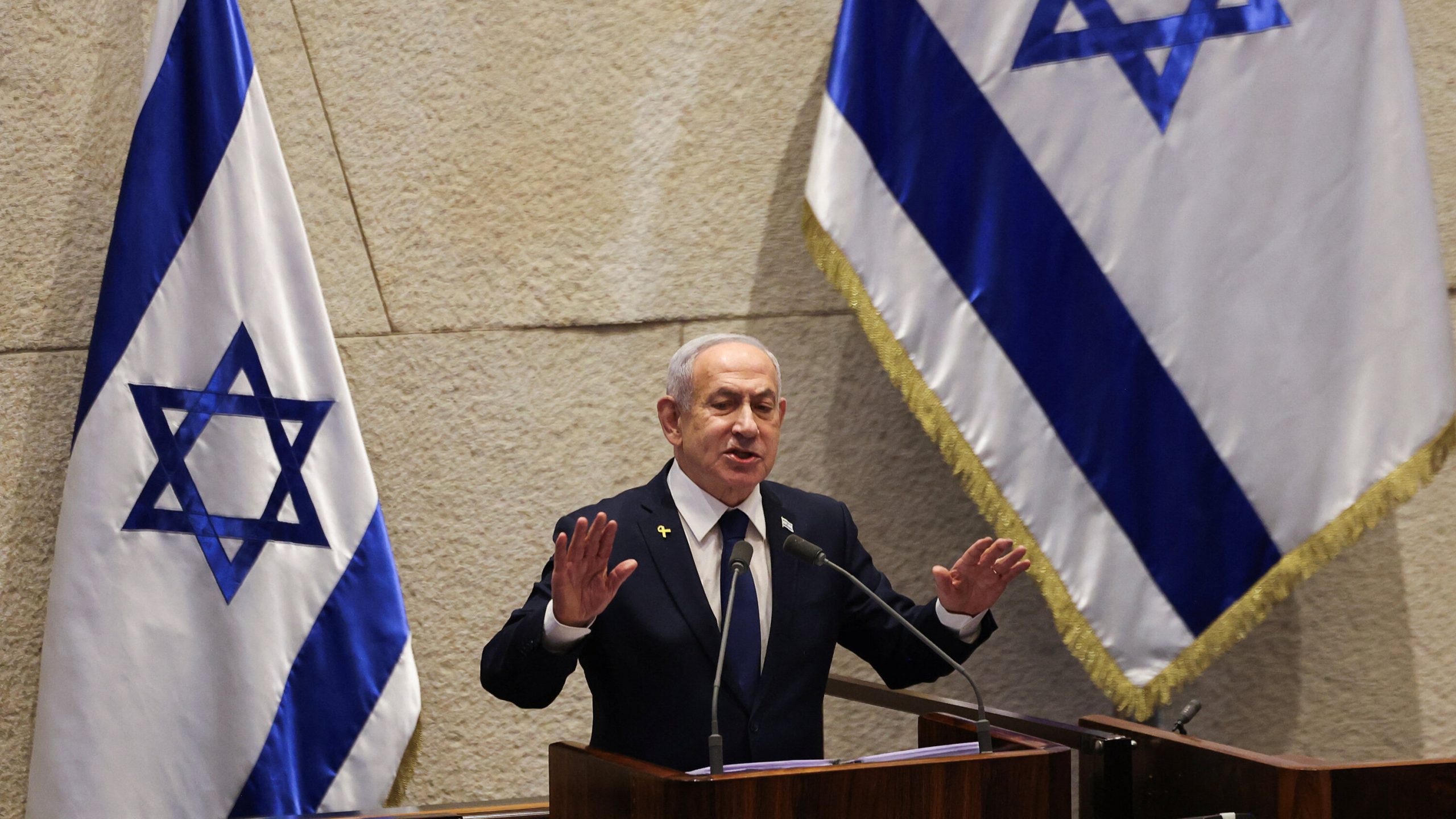

Israeli Prime Minister Benjamin Netanyahu, who is currently on trial for corruption, announced on Sunday, November 30, that he has submitted a formal pardon request to President Isaac Herzog, saying the long-running proceedings are tearing the country apart. His statement follows a letter sent earlier this month by US President Donald Trump urging Herzog to pardon the Israeli leader. Netanyahu, who has repeatedly denied all allegations, said in a video message, “The trial in my case has been ongoing for nearly six years, and is expected to continue for many more years.” He added that although he had wanted to see the process through until acquittal, “the security and political reality—the national interest—dictate otherwise,” insisting that “the continuation of the trial is tearing us apart from within, arousing fierce divisions, intensifying rifts.”
The corruption cases have sharply divided Israeli society, with Netanyahu’s supporters calling the prosecutions politically motivated. He and his wife, Sara, are accused in one case of accepting more than $260,000 worth of cigars, jewellery and champagne from billionaires in exchange for political favours, while other cases involve allegations that he sought favourable coverage from Israeli media outlets.
Netanyahu said the court’s demand for him to testify three times a week had “tipped the scales,” describing it as “an impossible requirement.” He argued that “an immediate end to the trial will greatly help to lower the flames and promote the broad reconciliation that our country so desperately needs.” His request was accompanied by a 111-page letter from his lawyers, which also did not include any admission of guilt. Herzog’s office confirmed receiving the request and described it as “an extraordinary request which carries with it significant implications,” adding that the president would “responsibly and sincerely consider the request” after receiving all relevant opinions.
Herzog had previously hinted in September that he could potentially grant such a pardon, saying Netanyahu’s case “weighs heavily on Israeli society.” Netanyahu, 76, is Israel’s longest-serving prime minister, having served more than 18 years across three terms since 1996. His current term saw the introduction of sweeping judicial overhaul proposals that critics said threatened to weaken the courts, sparking months of massive protests that subsided only after the Gaza war began in October 2023. Netanyahu has said he intends to run in the next elections, which must take place before the end of 2026.
Critics strongly condemned his move. Legal expert Eli Salzberger said the timing, coming just weeks after Trump’s letter, was “an orchestrated move,” predicting that if Herzog grants the pardon, it would almost certainly be challenged at the Supreme Court. Salzberger noted that under Israeli law, a pardon can only be granted to someone who has been convicted, saying that if the request is denied, “it will be an easier path for (Netanyahu) to settle on a plea bargain,” something the prime minister has so far rejected.
Opposition leader Yair Lapid insisted a pardon must require Netanyahu’s “admission of guilt, an expression of remorse and an immediate withdrawal from political life.” Yair Golan of the Democrats argued, “Only the guilty seek pardon.” Senior ministers, however, defended Netanyahu. Defence Minister Israel Katz said a pardon would end the “deep rift that has accompanied Israeli society for nearly a decade,” while Finance Minister Bezalel Smotrich claimed Netanyahu had “been persecuted for years by a corrupt judicial system that fabricated political cases against him.”
Netanyahu is the first sitting Israeli prime minister to face a corruption trial. Former prime minister Ehud Olmert resigned in 2009 before his own trial and was later sentenced to 27 months in prison for fraud. Dozens of protesters gathered outside Herzog’s home in Tel Aviv after the announcement, urging him to reject the pardon request. Anti-government activist Shikma Bressler said, “People of Israel understand what is at stake, and it really is the future of our country,” accusing Netanyahu of trying to “destroy the judicial system” and turning to the president only because “it wasn’t happening fast enough.” Another protester, Moshe Radman, said Netanyahu was trying to “run from his trial,” while Ami Dror argued that Herzog’s duty was to “protect Israeli democracy… and if you demolish law and order, this might be the end of Israeli democracy.”