

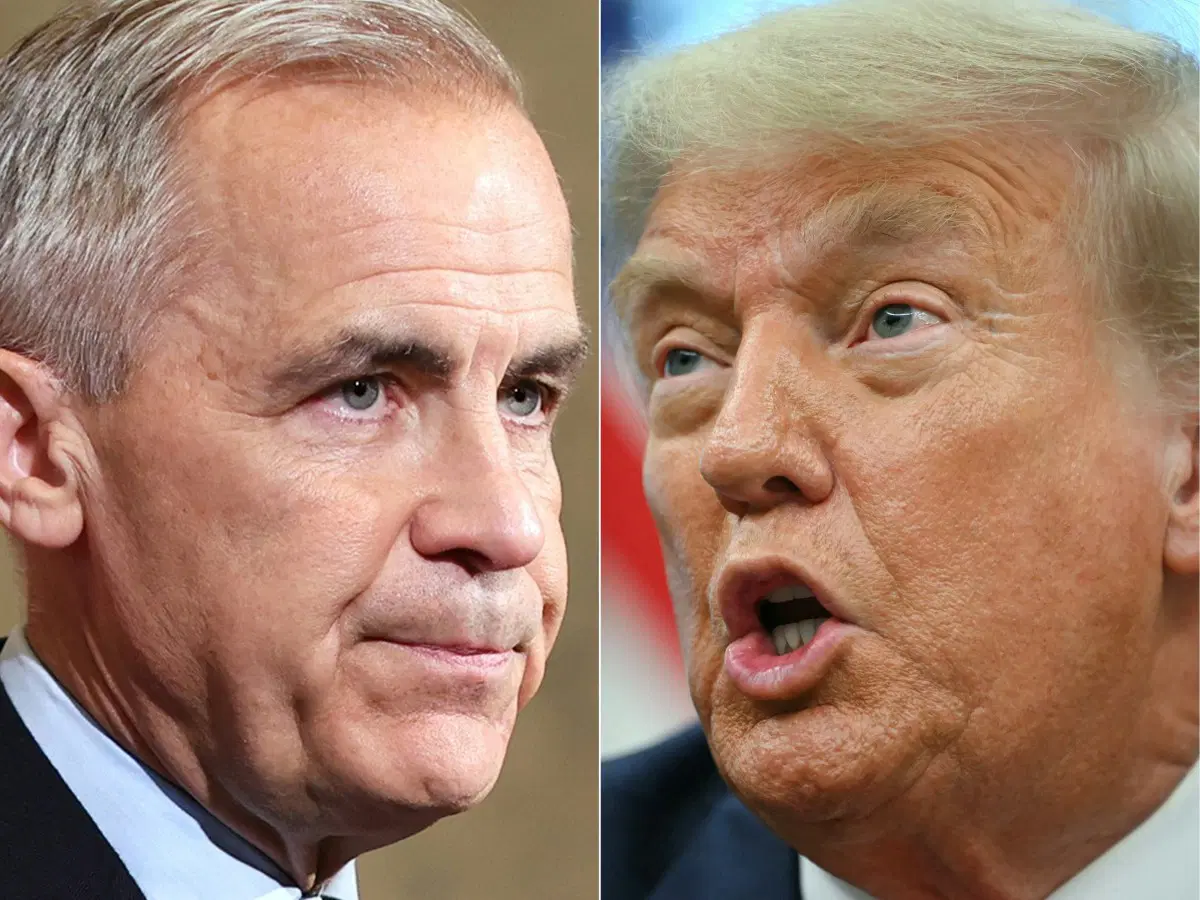
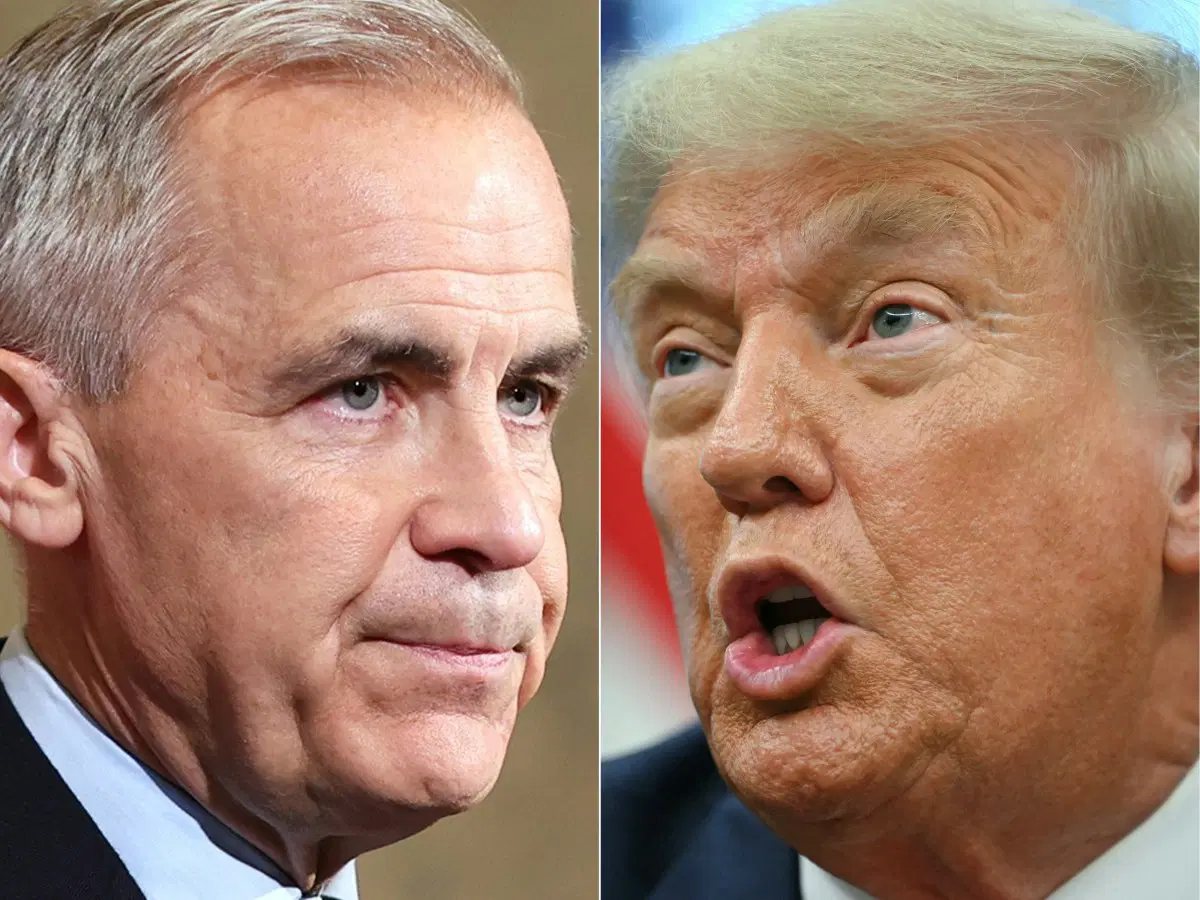
Canadian Prime Minister, Mark Carney has pushed back against President Donald Trump’s claim at the World Economic Forum that “Canada lives because of the United States,” firmly rejecting the assertion while still acknowledging the close relationship between the two countries.
“Canada doesn’t live because of the United States. Canada thrives because we are Canadian,” Carney said during a national address in Quebec City ahead of the opening of a new legislative session. He described the relationship between Canada and the United States as a “remarkable partnership,” but stressed that Canada’s success is rooted in its own identity, institutions and values.
Trump appeared to respond later on Thursday via his Truth Social platform, announcing that he was withdrawing an invitation for Canada to join the so-called “Board of Peace,” a body he has promoted as a billion-dollar initiative for resolving global conflicts.
A government source said Canada would not pay to be part of the board, although Carney had earlier indicated he would accept an invitation to join.
The exchange highlights growing tensions between the two long-standing allies. Carney’s remarks followed a widely watched speech at the World Economic Forum in Davos, Switzerland, where he received a standing ovation for warning of a “rupture” in the US-led, rules-based global order.
Although Carney did not mention Trump by name, the comments were widely interpreted as a criticism of the US president’s influence on global affairs.
In Davos, Carney said middle powers such as Canada, which had prospered during the era of an “American hegemon,” must recognize that global dynamics have shifted and that “compliance” would no longer protect them from major-power aggression.
Trump reacted sharply during his own appearance at the forum a day later.
“I watched your prime minister yesterday. He wasn’t so grateful,” Trump said.
“Canada lives because of the United States. Remember that, Mark, the next time you make your statements.”
Speaking later to a domestic audience, Carney said Canada should act as a model at a time of what he described as global “democratic decline.”
“Canada can’t solve all the world’s problems, but we can show that another way is possible, that the arc of history isn’t destined to be warped towards authoritarianism and exclusion,” he said.
Despite his criticism of Trump since the US president took office nine months ago, Carney leads a country heavily dependent on trade with the United States, which accounts for more than three-quarters of Canadian exports.
Key sectors such as automobiles, aluminum and steel have been affected by Trump’s global sectoral tariffs, though the impact has been partially softened by the continued application of an existing North American free trade agreement.
Negotiations on revising that deal are expected to begin this year. Trump has repeatedly insisted that the United States does not need access to Canadian products, a position that would have severe consequences for Canada’s economy.
Trump has also repeatedly threatened to annex Canada and recently posted an image on social media showing Canada — along with Greenland and Venezuela — covered by the American flag.
Carney said Canada was under no “illusions” about the fragile state of global relations.
“The world is more divided. Former alliances are being redefined and, in some cases, broken,” he said.
Referring to plans to increase defense spending, Carney added that Canada must “defend our sovereignty (and) secure our borders,” saying the country has a mandate “to be a beacon, an example to a world that’s at sea.”