

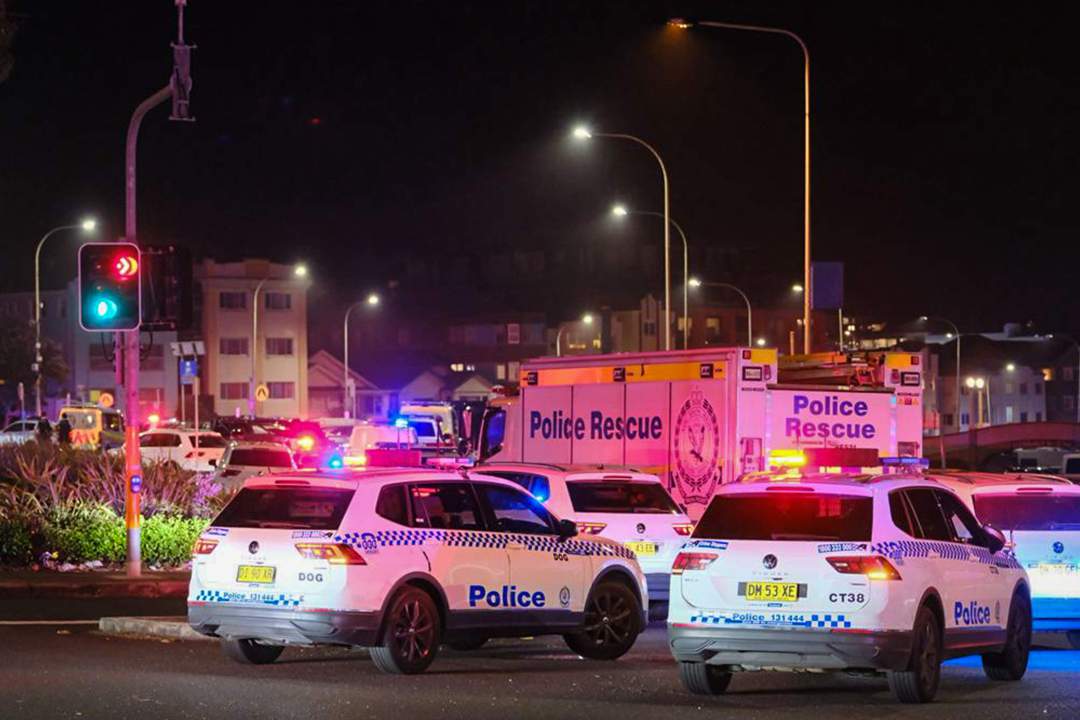

Australia’s Prime Minister Anthony Albanese has ordered a review of the country’s police and intelligence services following the deadly shooting at a Jewish festival on Bondi Beach that left 15 people dead.
Speaking on Sunday, December 21, Albanese said the government would examine whether security agencies have the powers, structures and information-sharing arrangements needed “to keep Australians safe,” after the attack at a Hanukkah celebration on Sydney’s most famous beach on December 14.
A father and son are accused of opening fire on families gathered for the event, an attack authorities say was allegedly inspired by Islamic State ideology.
“The ISIS-inspired atrocity last Sunday reinforces the rapidly changing security environment in our nation,” Albanese said. “Our security agencies must be in the best position to respond.”
The alleged gunman, Sajid Akram, 50, was shot dead by police during the incident. An Indian national, he entered Australia on a visa in 1998. His 24-year-old son, Naveed Akram, an Australian-born citizen, remains in hospital under police guard and faces multiple charges, including terrorism-related offences and 15 counts of murder.
Authorities disclosed that the younger Akram had previously been investigated by the Australian Security Intelligence Organisation in 2019 for possible radicalisation but was assessed at the time as not posing a threat. His father was also questioned during that review, yet later obtained a gun licence that allowed him to legally own six firearms.
In the weeks leading up to the attack, the pair had returned to Sydney after spending four weeks in the southern Philippines, a trip now under investigation by authorities in both countries.
“There are real issues,” Albanese said, referring to Australia’s intelligence processes. “We need to examine exactly the way that systems work. We need to look back at what happened in 2019 when this person was looked at, the assessment that was made.”
Addressing reports that the suspects stayed on the southern Philippine island of Mindanao, Albanese said their radicalisation was still under investigation, adding that they were “not seen to be persons of interest,” which made the attack “such a shocking event.”
Philippine authorities said there is no evidence the country is being used to train extremists, despite the region’s long history of Islamist insurgency. Staff at a hotel in Davao City told AFP that the two men largely stayed in their room during their 28-day stay, leaving only briefly most days.
Police reviewing CCTV footage said the father was seen visiting a gun shop during the trip.
Criminologist Clarke Jones of Australian National University described the case as “very, very unusual,” noting that attacks involving a father and son as co-perpetrators are rare.
“I think we would really need to look at what happened, and whether that kid, when he was first detected, should have been put through some sort of support programme to prevent this potential thing happening,” Jones said.
The review ordered by Albanese is expected to focus on intelligence assessments, monitoring processes, and whether earlier interventions could have prevented one of the deadliest terror attacks in Australia’s recent history.