

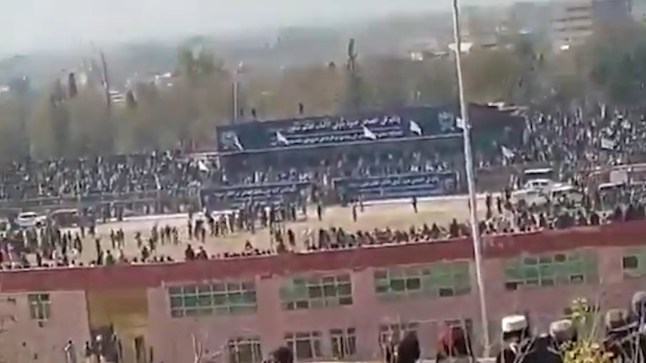

Three gunshots pierced the air and a packed cricket stadium erupted in cheers as a 13-year-old boy carried out the execution of a man convicted of killing nearly his entire family, a chilling spectacle that evoked the harshest memories of Taliban rule.
The execution took place in Khost province before an estimated 80,000 spectators. According to the Taliban-run Supreme Court, the executed man had been found guilty, along with another accomplice, of entering a family home and murdering 13 people, including nine children and their mother.
Under the Taliban’s interpretation of qisas (retributive justice), the victims’ relatives were given the option to forgive the killer. They refused, instead demanding the death penalty, and the court approved the execution after all judicial levels—including the Taliban’s supreme leader—signed off.
The boy fired three shots into the condemned man as sections of the crowd shouted “Allahu Akbar.” Mujib Rahman Rahmani, a resident who attended the execution, said such punishments could “prove to be positive” because “no one will dare to kill anyone in the future.”
Taliban authorities banned camera phones from the stadium, but images later emerged of crowds lining up to enter the grounds, with thousands more gathering outside once the venue reached capacity. This marks at least the 11th public execution since the Taliban seized power again in 2021.
During their previous rule in the late 1990s, the Taliban regularly staged public executions, amputations, floggings and stonings. Their return has brought the reimposition of strict Sharia punishments, alongside sweeping restrictions on women and girls, including bans on secondary and university education and most employment.
While corporal punishment, mainly public floggings, has become routine under the regime, today’s execution drew fresh international condemnation.
United Nations Special Rapporteur for Afghanistan Richard Bennett wrote on X that reports of the impending execution had circulated hours earlier, calling for it to be stopped. “Public executions are inhumane, a cruel and unusual punishment, and contrary to international law,” he said.
Despite such appeals, the execution proceeded, witnessed by tens of thousands, including families who travelled by car to the stadium, turning the event into a grim public spectacle.