

_1793350876.jpeg)
The Confederation of African Football (CAF) has reversed its decision to stage the Africa Cup of Nations (AFCON) every four years, restoring the competition’s traditional two-year cycle.
The decision was unanimously approved by CAF’s Executive Committee on Thursday, October 29, following months of discussions over the future schedule of Africa’s biggest football tournament.
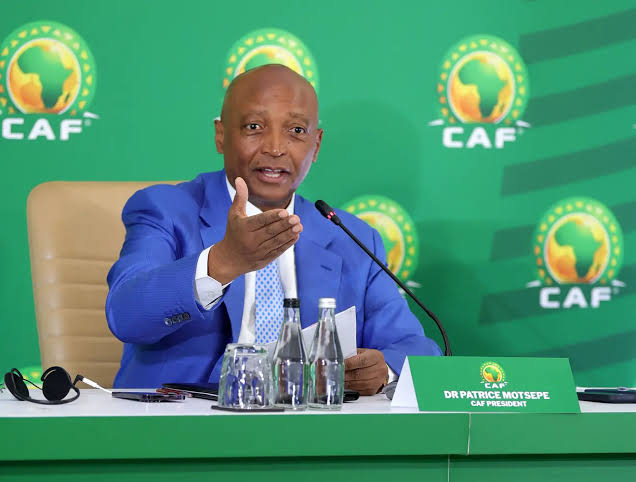
In a statement published on its website on Thursday, Motsepe said the decision to retain the two-year AFCON cycle was taken in the interest of African football, the confederation’s 54 member associations and African players playing for clubs outside the continent.
“The decision by the CAF EXCO that the CAF AFCON should take place every Two Years was based on advancing, protecting and promoting the interest of African Football and CAF’s 54 Member Associations, as well as the interest of African players employed by Football Clubs outside Africa,” he said.
Motsepe added that CAF was concerned about the time it would take for the proposed Africa Nations League to deliver the financial and developmental gains initially expected from the competition.
He said the new tournament was intended to mirror the existing AFCON format and take place every two years, but would not provide the required support for African football in the immediate future.
Under the revised calendar, the next AFCON will take place in 2027, with Kenya, Tanzania and Uganda jointly hosting the tournament.
Motsepe expressed confidence in the three East African countries’ ability to deliver a successful tournament in 2027.
He also described AFCON as more than a football competition, saying it provides an opportunity to celebrate Africa’s cultures and bring people from across the continent and the diaspora together.
“The AFCON competition is also about celebrating African Football and Africa’s rich and diverse cultures, customs and traditions and bringing people together from Africa’s 54 Countries, the African Diaspora and throughout the world,” he said.
“The CAF EXCO decision is in the best interest of African Football and CAF’s 54 Member Associations and will also contribute significantly to the development and growth of football in Africa,” he added.