

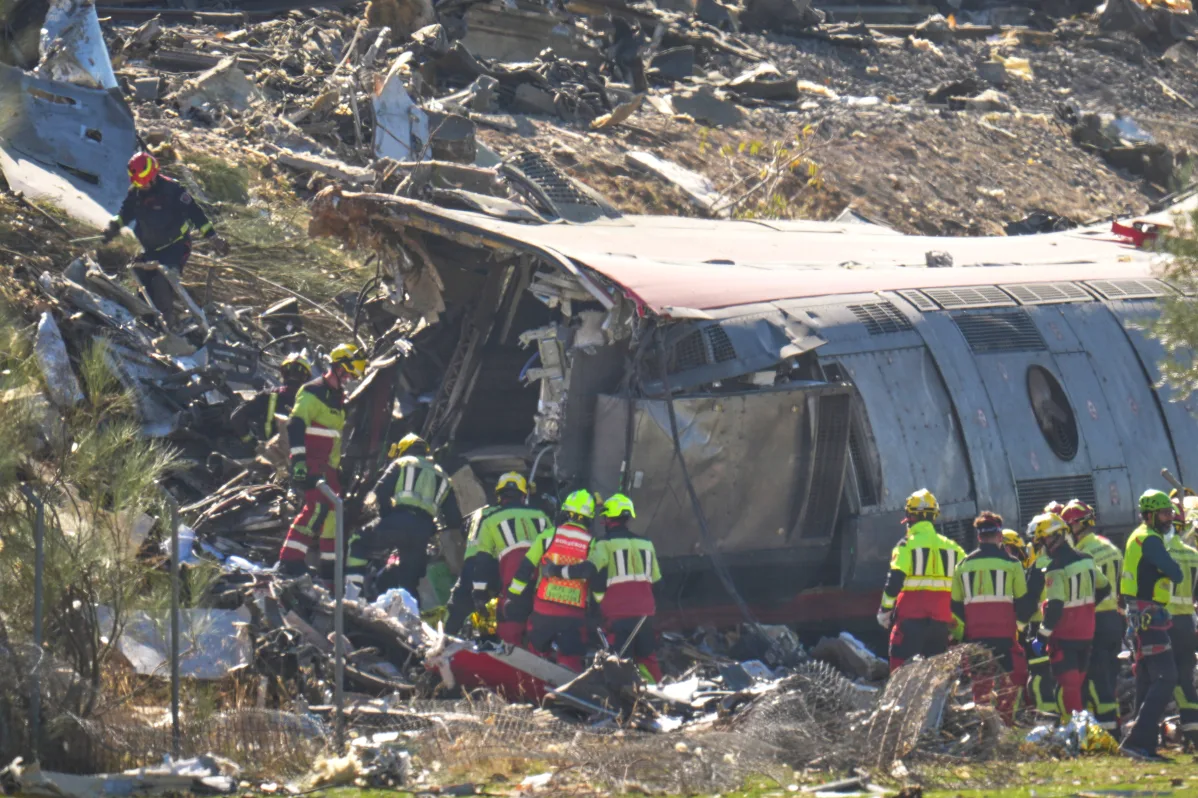
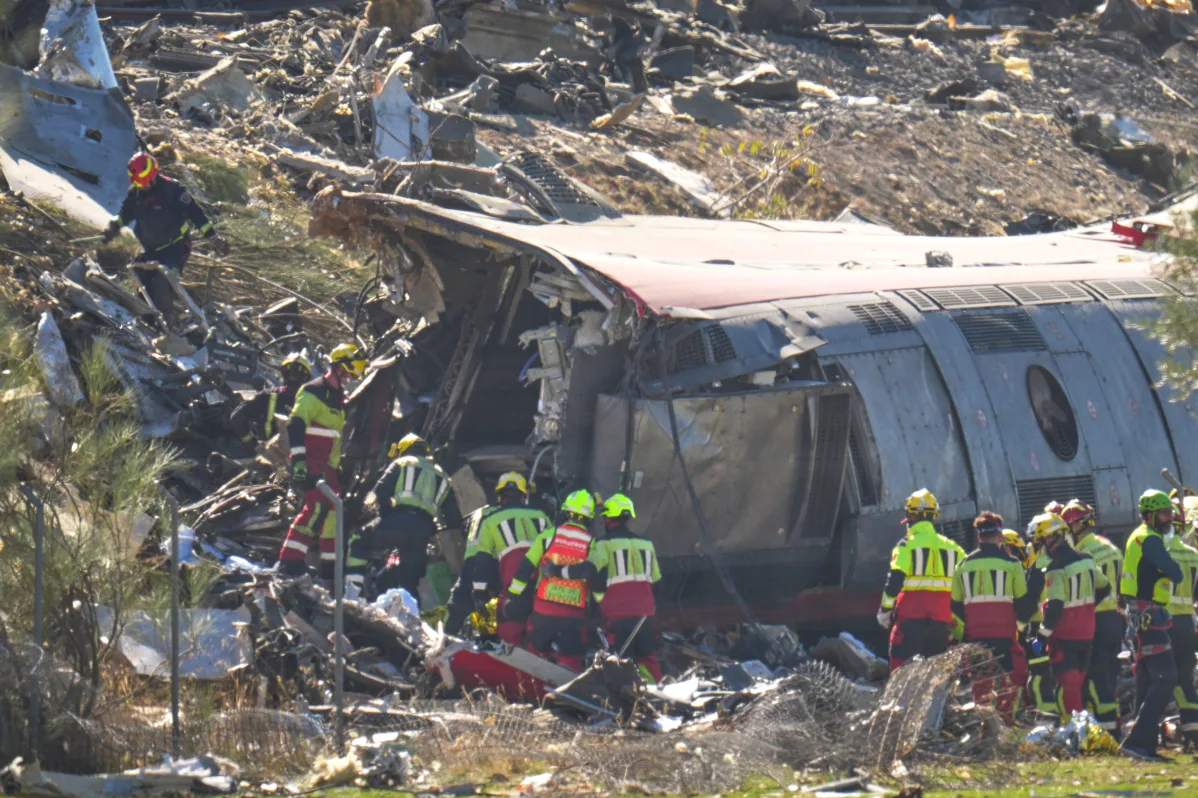
A high-speed train slammed into the rear of a stationary train on Wednesday, October 28, in central Spain, derailing two carriages and killing at least 64 people.
The central government’s office for Castilla-La Mancha confirmed the rising death toll. Emiliano García-Page, the regional president of Castilla-La Mancha, reported that at least 80 people were injured as emergency personnel continued searching the wreckage for survivors and victims.
The disaster marks Spain’s second major rail accident of the year.
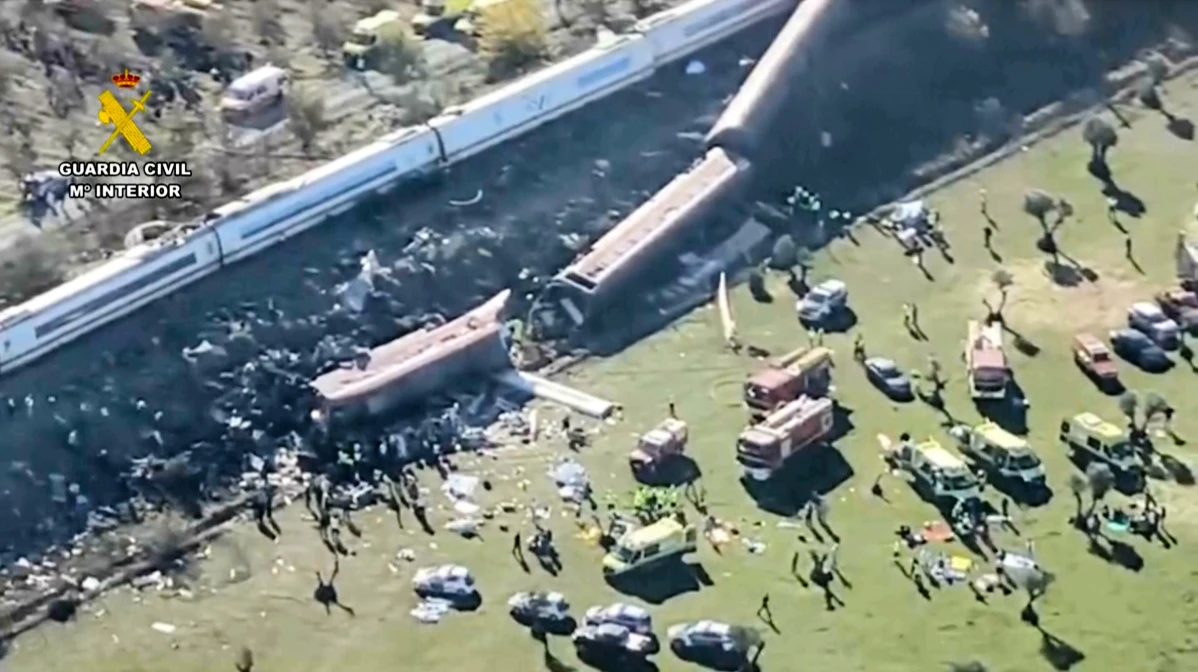
According to Spain’s rail system operator, ADIF, the crash occurred Wednesday morning in the province of Toledo. The collision involved two high-speed trains carrying hundreds of passengers, both traveling in the same direction from Madrid to Seville.
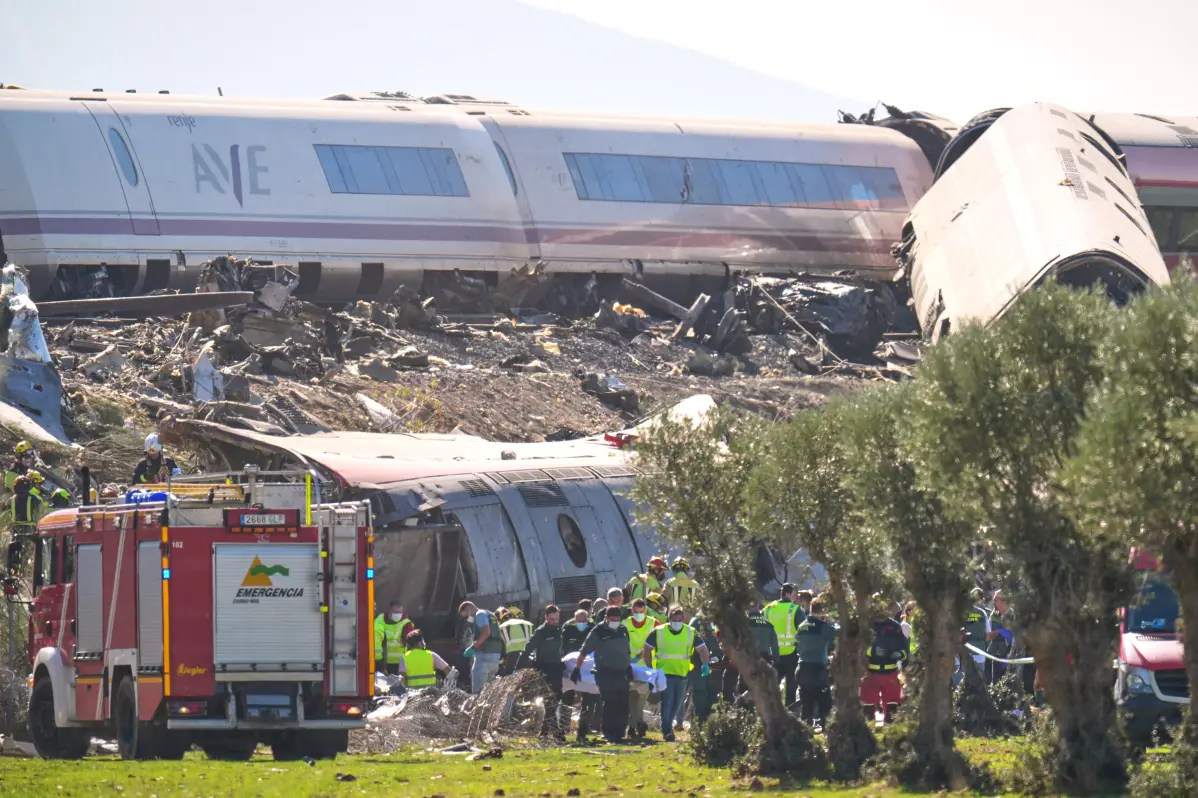
Esther Padilla, a spokesperson for the Castilla-La Mancha region, stated that a state-owned RENFE train ran into the tail-end of a stopped private IRYO train, knocking two cars off the tracks. Rail service between Madrid, Ciudad Real, and Andalusia was suspended.
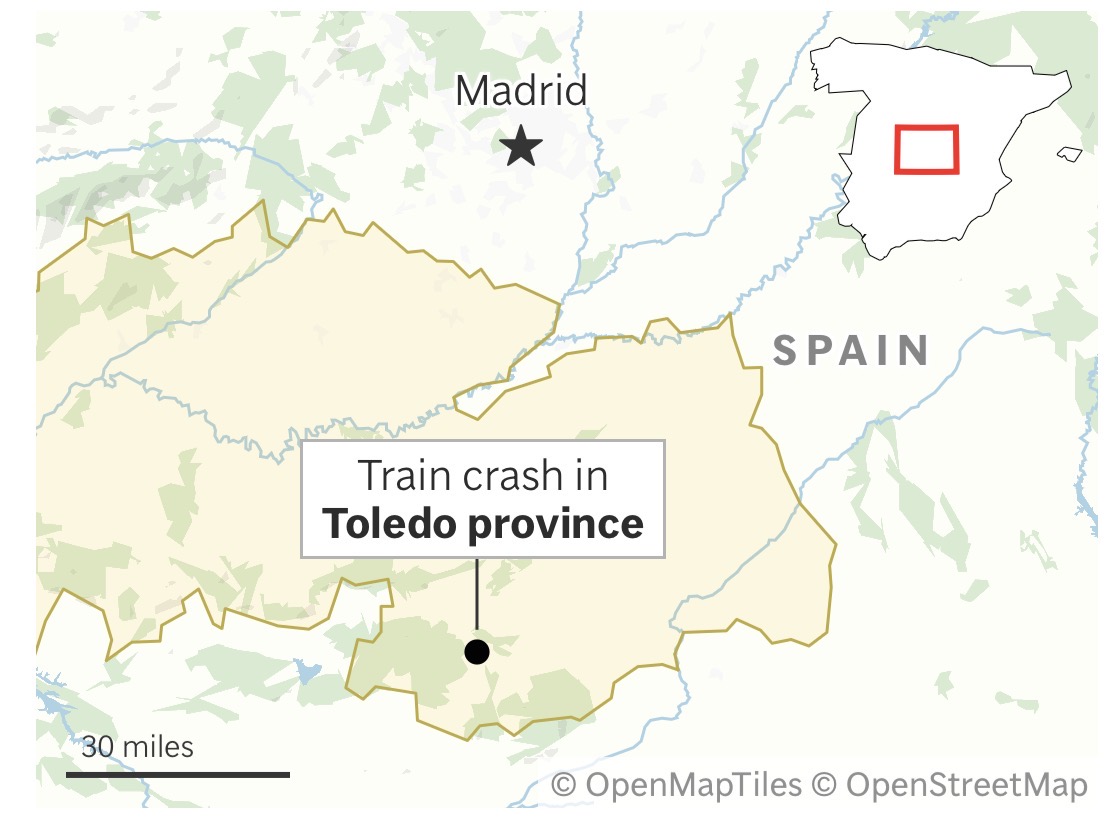
The impact occurred along a flat stretch surrounded by olive fields between the towns of Urda and Los Yébenes, reducing one rail car to a mass of twisted metal and scattering debris down a gravel slope.
Spanish Health Minister Mónica García noted that emergency teams prioritized extracting survivors and bodies from the most heavily damaged carriages.
“It was a high-speed impact, so we are expecting this to be a tragedy,” García said.
The collision involved a RENFE AVE train carrying 397 passengers and an IRYO train with 147 passengers. Regional officials reported that 24 fatalities occurred on the RENFE service and six on the IRYO train, with the remainder under ongoing accounting.
Passenger Ignacio Relaño, aboard the RENFE service, told state broadcaster TVE that the train had stopped momentarily before accelerating and hitting the IRYO train.
“We all felt the train abruptly slowing down and then the impact,” Relaño said. “The car leaned to one side like it was about to tip over. I hit my nose, everything went flying, luggage, cell phones. Everything shook.”
IRYO, an Italian-owned private carrier, stated that it had activated security protocols and was cooperating fully with authorities.
The mayor of nearby Urda, Manuel Galán, reported that civil protection teams converted a local sports pavilion into a triage center for injured passengers. Military emergency brigades, firefighters, police, ambulances, and medical helicopters were deployed to the site, while uninjured survivors were evacuated by bus.
Prime Minister Pedro Sánchez canceled his official schedule to monitor the disaster, writing on X that he was “dismayed by the serious train accident in Toledo”.
Spain’s King Felipe VI and Queen Letizia issued a joint statement expressing deep sorrow and offering solidarity to the victims’ families and the injured.
European Commission President Ursula von der Leyen also extended her condolences, stating, “Today, Europe mourns with you.”
In response to the tragedy, Spain’s football federation postponed all 24 Copa del Rey matches scheduled for Wednesday.
Wednesday’s disaster evokes memories of a January collision in southern Spain that killed 46 people when an IRYO train derailed and struck an oncoming RENFE service. That incident, the deadliest in Spain since 2013, already severely strained public confidence in the nation’s high-speed rail network.
Spain operates one of the most extensive high-speed rail networks in the world, spanning approximately 3,900 kilometers (2,400 miles) following decades of heavy investment. However, following recent market liberalization allowing private competitors like IRYO to challenge state incumbent RENFE, labor representatives have raised questions regarding infrastructure maintenance.
Joan Rodríguez, a spokesperson for Spain’s train workers’ union, told TVE that increased traffic density following privatization has placed extra strain on the network.
“We are not convinced that the liberalization of the high-speed passenger rail service was matched by the necessary upkeep of the lines,” Rodríguez said. “I am not saying it was a determining factor, but yes, the increase in use of the network is a factor to keep in mind.”