

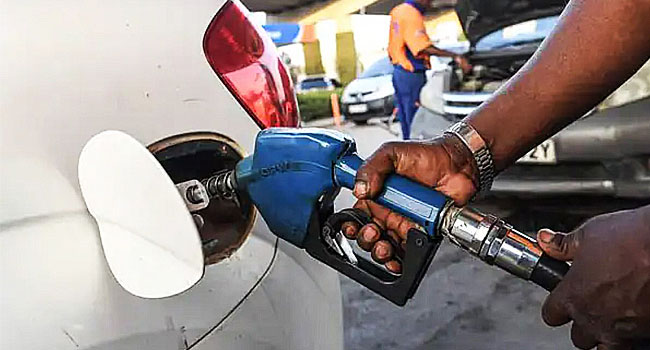
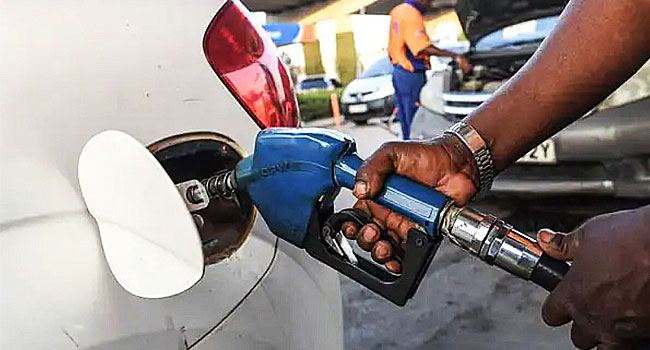
The Federal Government is negotiating a ₦1,350-per-litre ceiling on the ex-gantry or landing cost of petrol under a proposed mechanism aimed at stabilising pump prices and easing pressure on households and businesses.
Minister of Finance and Coordinating Minister of the Economy Taiwo Oyedele announced the proposal on Thursday, October 8, during a briefing in Abuja, saying existing measures had not sufficiently addressed rising fuel and transportation costs. The proposed ceiling applies to petrol supplied from refineries or imported into the country, rather than the price motorists would pay at filling stations. It would be reviewed monthly, with the figures published.
“Pump prices should not have to follow every swing in global crude or the exchange rate. The government is negotiating a ceiling of ₦1,350 a litre on the ex-gantry or landing cost of petrol to keep pump prices stable,” Oyedele said. He said refiners and importers would initially absorb costs above the ceiling and recover the shortfall later when market conditions allowed. Oyedele described the arrangement as a price-smoothing mechanism rather than a subsidy or price control.
“The reasoning is simple: ₦1,400 a litre today and ₦1,400 a litre tomorrow is better than ₦1,500 a litre today and ₦1,300 a litre tomorrow,” he said. “Why? Because volatility itself adds to uncertainty and cost, and when fuel goes up sharply, they rarely come down as fast.” The government also plans to introduce a temporary margin discount on petrol sold by the Nigerian National Petroleum Company Limited for an initial 30 days, prioritising public transport operators nationwide.
The minister said the discount would involve selling petrol at cost and would not constitute a return to fuel subsidy. Other proposals include forward sales of crude oil to domestic refiners as production increases, with the aim of improving supply certainty and reducing exposure to global market fluctuations.
Oyedele said the government would work with state authorities to remove illegal levies and road-use charges that increase transport costs. It also plans to expand cash transfers for vulnerable households and direct credit support for small businesses. The rollout of compressed natural gas for transport operators would be accelerated, with operators expected to pass savings on to commuters.
The minister said operators who exploit consumers could face sanctions, with proceeds from enforcement directed towards transport support. The government is also considering an excess profits tax and targeted vouchers for low-income earners, alongside efforts to reduce regulatory costs and administrative barriers.
Plans also include establishing a national strategic fuel reserve to protect against supply disruptions and hoarding, improving traffic management and using NIPOST address codes to lower logistics costs. Oyedele said the measures would be expanded in partnership with state governments to ensure support reached those most in need without adding pressure to the wider economy.