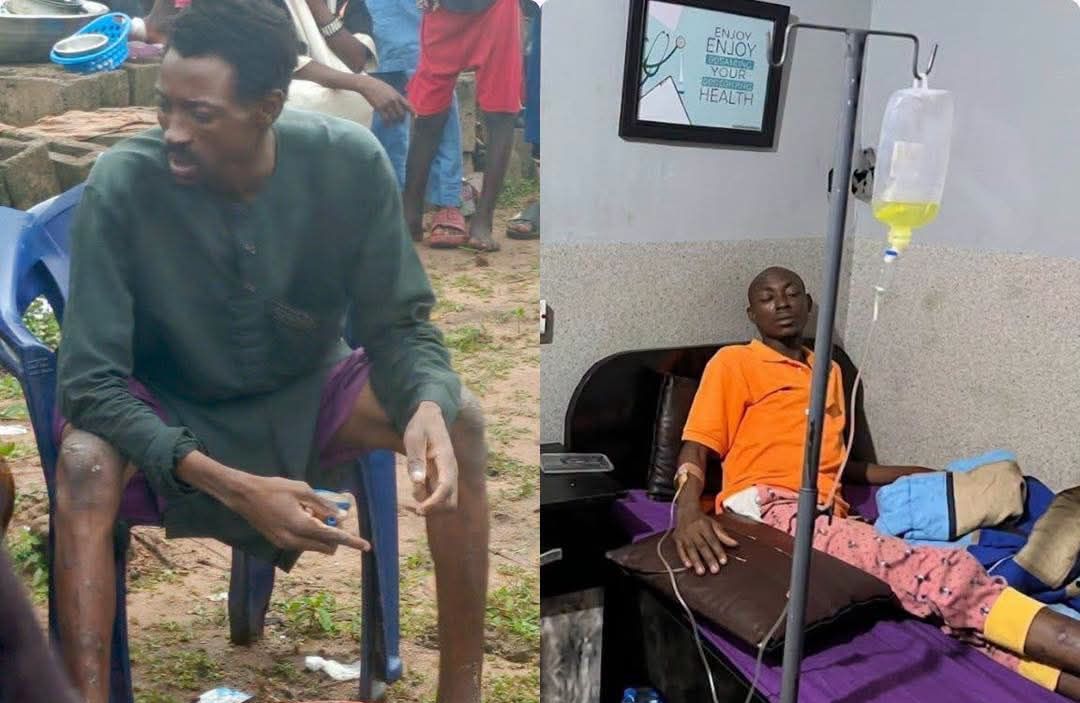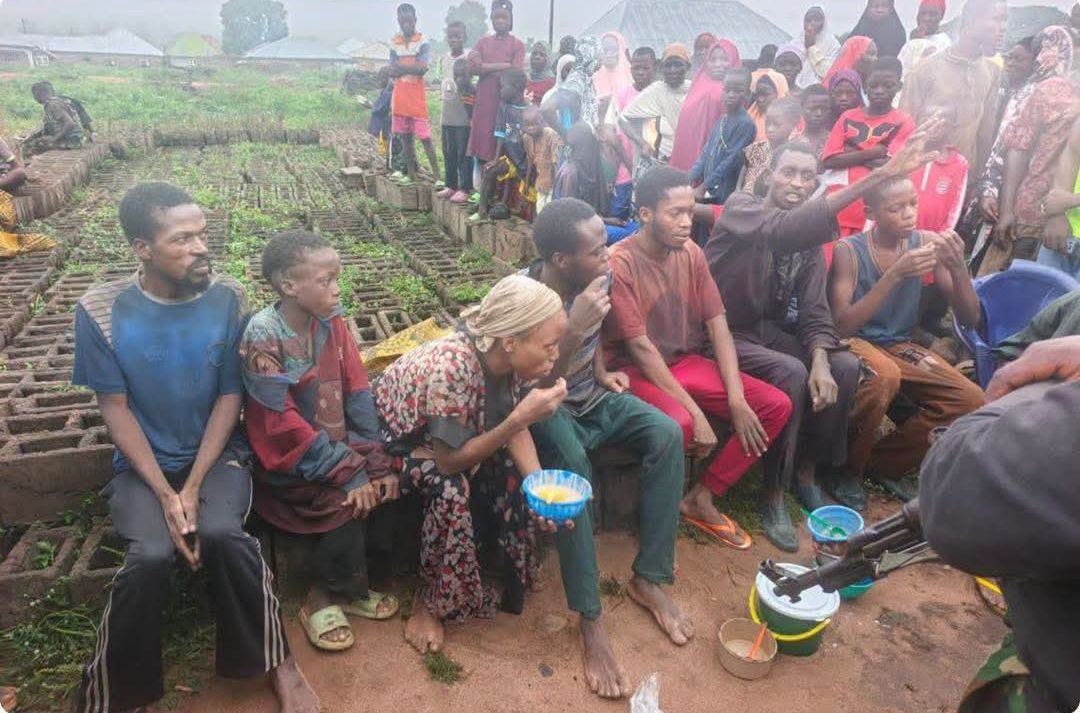

A man, Mohammed Baba Salihu, who was abducted from his home in Tsaragi, Edu Local Government Area of Kwara State, on May 8, 2026, has recounted his harrowing 141-day ordeal in captivity, including his escape from two separate bandit camps and a nine-day journey through the bush.
Speaking in an exclusive interview with Kwara journalist, Usman Haruna after his eventual escape, Salihu revealed that he was initially abducted after gunmen invaded Tsaragi at night, reportedly targeting an engineer in the community.
“They did not come for me. Something happened, and before I understood what was going on, a person was already dead, and they had turned to me,” he said.
Salihu was subsequently taken into the bush, where he spent months in captivity.
During his captivity, Salihu said two men arrived at the bandits’ camp in connection with a ransom payment of about N13 million intended to secure his release.
According to him, the ransom handover ended in gunfire. One of the men was shot, while the other escaped into the bush.
Salihu said the wounded man was later brought back to the camp, where the kidnappers asked if he knew him.
He confirmed that he did and was subsequently allowed to help care for the injured man.
“He was getting better. I could see it. He was becoming stronger.”
However, the two were later separated. Salihu said he only discovered after returning home that the wounded man had d!ed in captivity.
Beyond the violence, Salihu described hunger and thirst as some of the most difficult parts of his captivity.
He said there were periods when the captives went as long as four days without food, while water was also not provided regularly.
“Sometimes it was four days before food reached us. Not just food, even water was never given daily,” he said.
The prolonged deprivation, he said, left him severely weakened and caused him to lose significant weight and muscle mass.
Salihu’s first escape did not immediately lead to freedom.
After breaking away from one of the camps, he found himself deep in the bush with no knowledge of the direction home.
“I did not know the road. I did not know which direction led home. I walked for nine days.”
After nine days of walking without knowing whether he was getting closer to home or moving deeper into the bush, Salihu encountered another group of armed men.
Instead of finding safety, he was captured again and taken to another bandit camp.
“I thought I had escaped. Instead, I met another set of bandits who took me to another camp. The suffering continued.”
The ordeal eventually came to an end on Saturday, September 26, 2026, when Salihu and eight other captives escaped together.
According to him, two Fulani men were among the captives and could understand some of the conversations between the kidnappers. They reportedly shared information with the other captives.
When the group noticed that there was no supervision around them, they seized the opportunity and escaped together.
The nine survivors eventually made their way out of the bush and arrived at Lata Nna, where local residents received them before soldiers stationed in the area took over.
Salihu said the military subsequently debriefed the survivors before they were reunited with their families.
Recalling their arrival at Lata Nna, Salihu said the physical condition of the escapees was extremely poor.
“When we finally walked into Lata Nna, some of us could barely stand.”
He said community members provided immediate assistance before security personnel took over the situation.
Salihu is currently receiving medical attention following the physical toll of more than four months in captivity.
He is being treated for severe dehydration and malnutrition, having lost significant weight and muscle mass during his ordeal.
He is also being monitored for the psychological effects of the experience.
His family remains by his side as he begins what is expected to be a long recovery.