

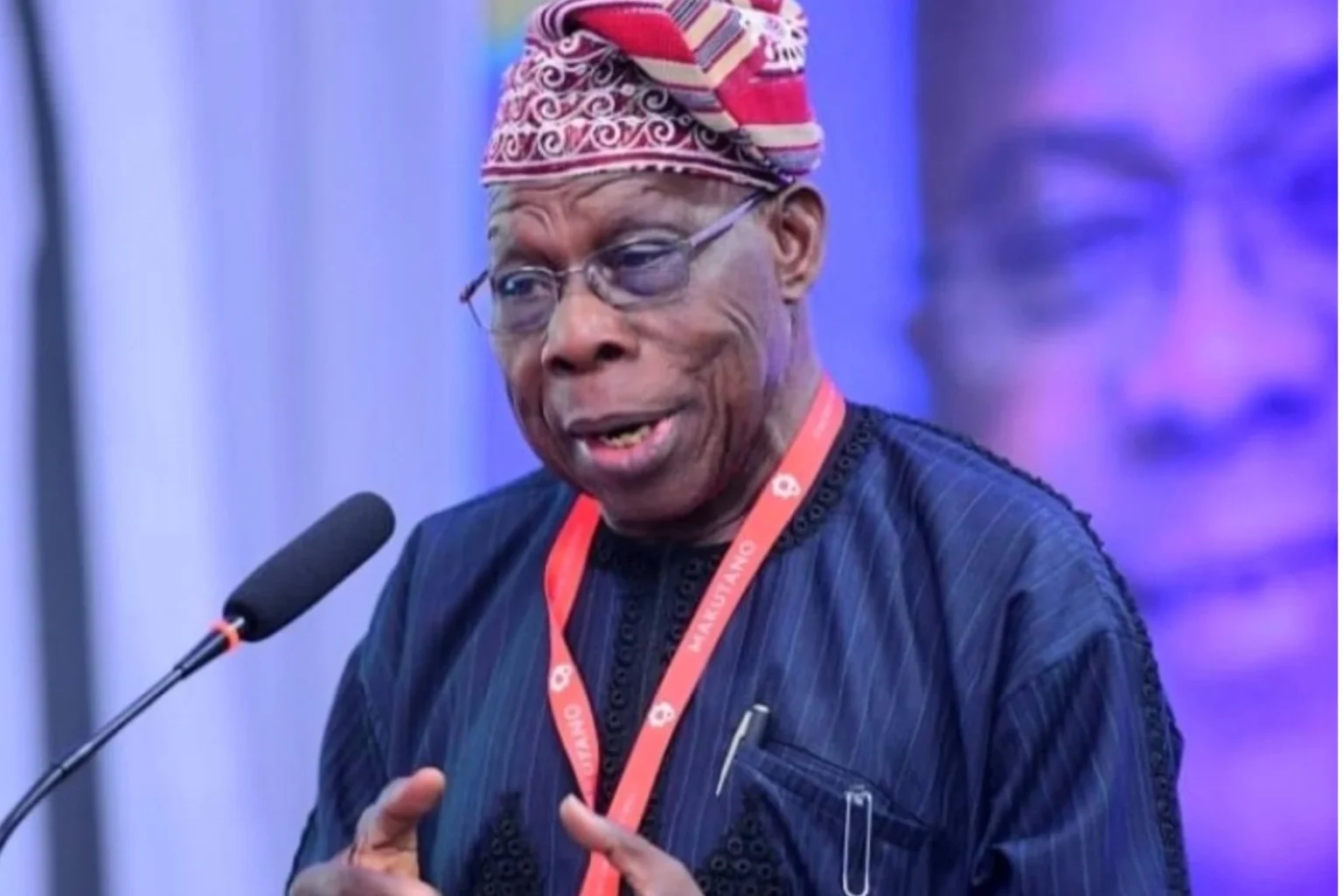

Former President Olusegun Obasanjo has declared that Nigeria has no business with poverty, arguing that the country’s natural resources, agricultural potential, and human capital are sufficient to support a prosperous national economy.
Obasanjo made the observations during an interview on C-Suite Café while examining Nigeria’s economic challenges and the systemic failure to fully utilize available national assets.
Reflecting on the nation’s untapped potential, the former president highlighted Nigeria’s millions of hectares of arable land, favorable climatic conditions, and abundant water resources capable of supporting massive domestic food production and large-scale agricultural exports.
He pointed to the country’s human capital, including the entrepreneurial and intellectual capacity of Nigerians both domestically and in the diaspora, as vital assets that remain severely underutilized. He further identified solid minerals alongside crude oil and natural gas as strategic reserves capable of diversifying revenue generation.
Addressing the structural drivers of economic stagnation, Obasanjo criticized administrative policy inconsistency, pointing directly to the abandonment of long-term development strategies and agricultural initiatives whenever government leadership changes.
The former president raised concerns regarding rising public debt profiles, referencing the debt relief achieved during his administration which cleared approximately $30 billion in external debt between 2005 and 2006. He cited systemic corruption, crude oil theft, and structural leakages in public revenue generation as primary obstacles preventing the state from deploying its wealth for public infrastructure and social development.
According to Obasanjo, eradicating poverty across the country demands sustained political will, policy continuity, particularly concerning national food security and rigorous fiscal accountability across all tiers of government.
He maintained that Nigeria’s prevailing economic difficulties can be permanently reversed through competent resource management and sustained commitment to long-term economic planning.