

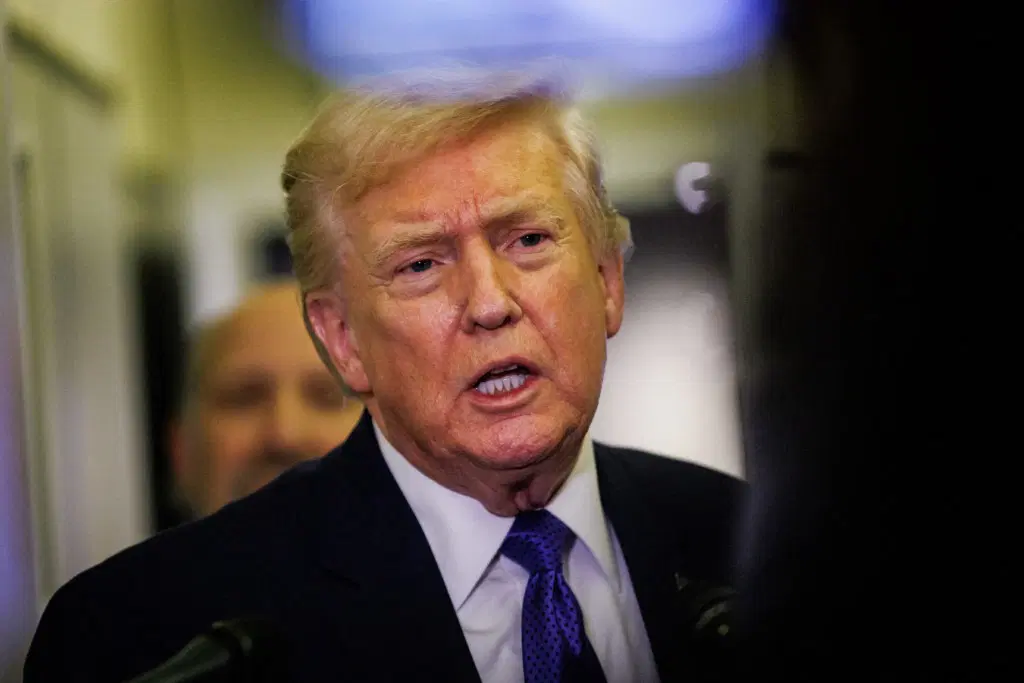
US President, Donald Trump said he is not concerned about whether Iran becomes a democratic state, stating that his priority is ensuring the country has leadership that treats the United States and its allies fairly.
In a phone interview with CNN, Trump claimed Iran’s leadership had been severely weakened following recent military actions. He said the country is no longer as powerful as it was just days earlier and suggested that new leadership could soon emerge.
According to Trump, the United States could play a role in shaping Iran’s future leadership, drawing comparisons to the situation in Venezuela, where the US earlier this year captured President Nicolás Maduro and installed his deputy, Delcy Rodríguez, as acting leader.
He added that he would not oppose a religious leader governing Iran if that person proved fair and cooperative with the US and its allies. Trump stressed that the most important factor is having leadership that maintains good relations with the United States, Israel, and other countries in the Middle East.
The president also praised US military operations against Iran, describing the campaign as extremely successful and claiming that Iranian naval capabilities had been significantly damaged.
Despite concerns about rising oil prices, Trump said any increases would likely be temporary and insisted the situation would stabilize quickly.
During the interview, Trump also predicted that Cuba could soon experience major political change, saying the island nation is eager to negotiate with the United States. He indicated that Secretary of State Marco Rubio could play a key role in handling future negotiations once the conflict with Iran is resolved.
Trump further emphasized that one of his administration’s top domestic priorities after the war would be passing the SAVE America Act, legislation aimed at tightening US election laws. The bill would require voter identification, proof of citizenship for voter registration, and stricter limits on mail-in voting.
The president said his endorsement in the ongoing Texas Senate race could depend on whether candidates support the legislation. The race currently involves incumbent Senator John Cornyn and Texas Attorney General Ken Paxton, both of whom have expressed support for the bill.