

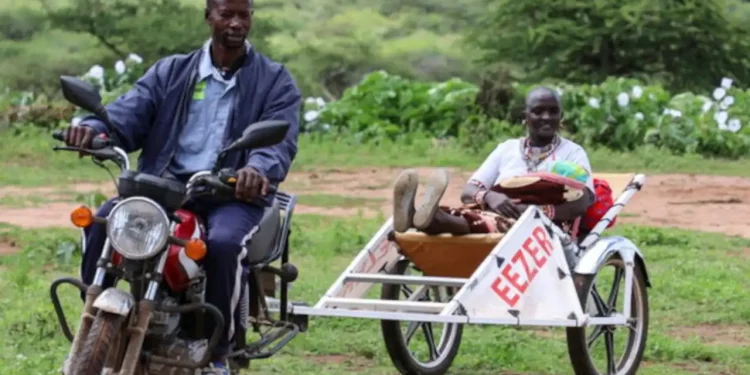

Citizens across Kenya have reacted with disbelief, sarcasm and anger following the rollout of motorcycle ambulances by the Laikipia County Government, an initiative aimed at improving maternal and child healthcare in remote communities.
The programme, which is intended to bridge long distances and poor road networks, has instead sparked intense public debate online, with many Kenyans questioning safety, dignity and government priorities in healthcare delivery.
The motorcycle ambulances were unveiled in Laikipia North, a region characterised by rugged terrain and limited access to conventional emergency services.
Images of the vehicles, some fitted with patient trailers, circulated widely on X within hours of the launch, drawing thousands of reactions and critical comments.
County officials have defended the initiative, describing it as a practical, life-saving intervention rather than a reduction in healthcare standards.
Speaking at the launch on February 4, 2026, the Laikipia County Executive for Health, Albert Taiti, said the decision was deliberate and driven by urgent healthcare needs.
“Today, we are excited to be launching the pilot for motorcycle ambulances in collaboration with the Eezer Initiative. This comes at a time when the county is working hard to improve maternal and child health outcomes,” he said.
Dr Taiti said the county continues to face challenges reaching some communities during medical emergencies. “There are places where a normal ambulance simply cannot reach in time. These motorcycles are meant to respond quickly and save lives,” he added.
The pilot project is being implemented in partnership with the Eezer Initiative, a Swedish-backed programme focused on improving access to healthcare in rural parts of Africa.
So far, five motorcycle ambulances have been deployed across Laikipia North and parts of Laikipia West.
The Eezer Initiative’s Laikipia coordinator, Alfred Sadera, said the project was designed to address long-standing access issues.
“We understand the challenges women face when they go into labour far from a health facility. Long distances and poor roads have cost lives. We believe this project addresses that gap,” he said.
Despite these assurances, public reaction online has remained largely sceptical. Many Kenyans questioned whether pregnant women and critically ill patients could be safely and humanely transported on motorcycles, even with attached trailers, while others criticised what they described as misplaced priorities in a country still grappling with gaps in basic healthcare infrastructure.