

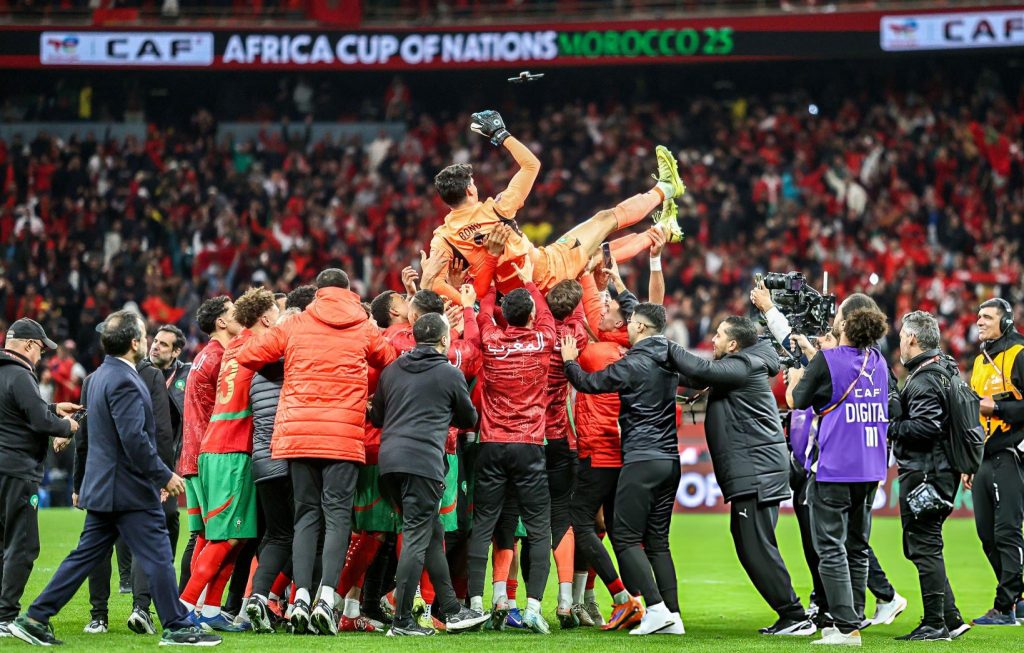
Nigeria’s Super Eagles saw their remarkable Africa Cup of Nations (AFCON) unbeaten run come to an end on Wednesday night after being held to a goalless draw by hosts Morocco at the 2025 tournament, before suffering a painful 4–2 defeat in a penalty shoot-out at the Prince Moulay Abdellah Stadium in Rabat.
The result not only denied Nigeria a place in a second consecutive AFCON final but also brought an end to one of the most impressive attacking sequences in the nation’s AFCON history.
Bounou the Hero as Morocco Reach Final After 22 Years
Morocco goalkeeper, Yassine Bounou emerged as the decisive figure, producing a masterclass in the penalty shoot-out to send the hosts into their first AFCON final in 22 years.
After 120 minutes failed to separate the sides, Bounou denied Samuel Chukwueze and Bruno Onyemaechi, sealing a dramatic shoot-out victory.
The shoot-out unfolded as follows:
-
Neil El Aynaoui and Paul Onuachu converted the opening penalties.
-
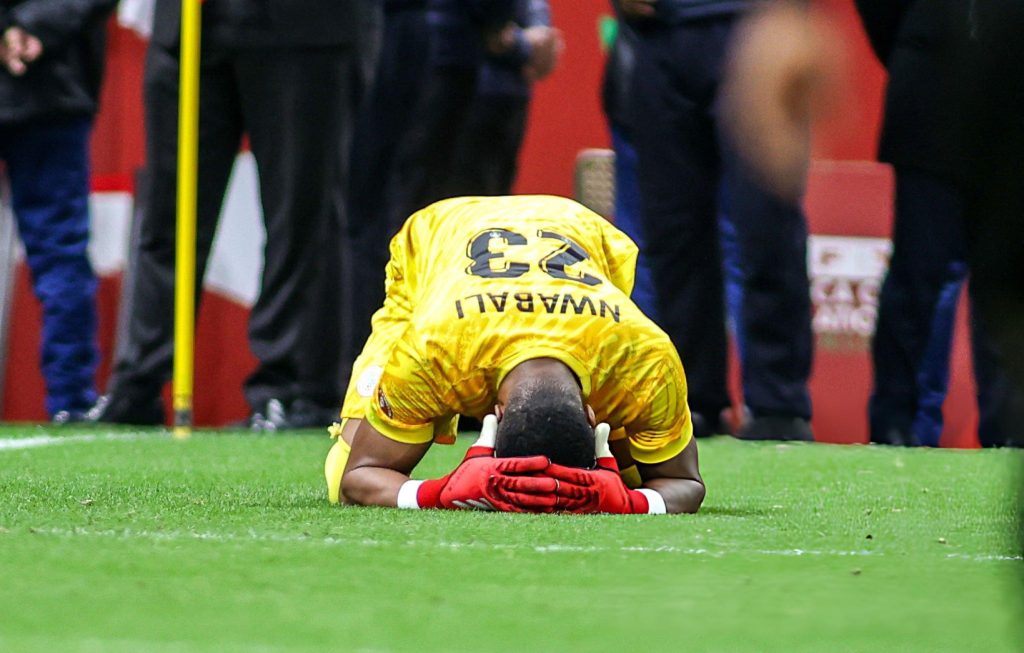
Stanley Nwabali saved Hamza Igamane’s effort, giving Nigeria hope.
-
Bounou responded by saving Chukwueze’s kick.
-
Eliesse Ben Seghir and Fisayo Dele-Bashiru scored.
-
Achraf Hakimi put Morocco 3–2 ahead.
-
Bounou denied Onyemaechi.
-
Youssef En-Nesyri calmly converted the decisive penalty to spark wild celebrations in Rabat.
A Balanced Semi-Final Decided by Fine Margins
The match itself was an absorbing, finely balanced contest.
Morocco threatened early through Brahim Díaz, whose curling effort drifted narrowly wide, while Nwabali reacted sharply to deny Ismail Saibari.
Nigeria’s Ademola Lookman tested Bounou with a low drive, while Victor Osimhen was tightly marshalled throughout by Morocco’s disciplined defence.
After the break, Morocco grew in control, but Calvin Bassey delivered a commanding display at the heart of Nigeria’s defence.
Morocco’s best second-half chance fell to Abde Ezzalzouli, whose curling effort was expertly saved by Nwabali.
With fatigue setting in during extra time, caution prevailed and penalties ultimately decided the contest.
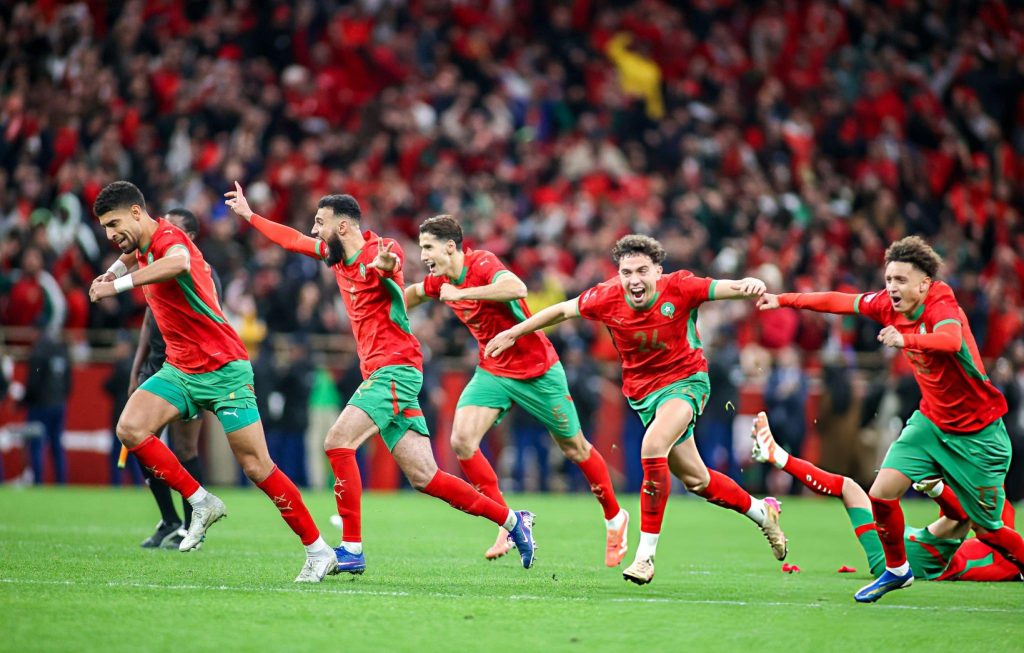
End of a Historic Scoring Streak
The stalemate result also became the first time Nigeria failed to score at AFCON since January 2021, when Youssef Msakni’s strike handed Tunisia a 1–0 victory over the Super Eagles in Garoua, Cameroon.
That defeat had been Nigeria’s last blank at the continental tournament, until the semi-final against Morocco.
In between, the Super Eagles embarked on their longest scoring run in AFCON history, finding the net in 12 consecutive matches across two tournaments, a sequence built on efficiency, depth, and variety in attack.
More Records Halted Against Morocco
The goalless semi-final against Morocco ended more than just the scoring streak.
Nigeria had scored at least two goals in each of their previous five matches at AFCON 2025, the first time they had ever achieved such a feat at the tournament.
It was also only the second time in Nigeria’s history that they had scored in five consecutive matches at a single AFCON, the first being in 2000.
How the Run Began: AFCON 2023 Journey
Nigeria’s scoring streak began at the 2023 AFCON with a 1–1 group-stage draw against Equatorial Guinea, where Victor Osimhen scored Nigeria’s opener.
It continued with:
-
Nigeria 1–0 Ivory Coast – William Troost-Ekong penalty
-
Nigeria 1–0 Guinea-Bissau – Opa Sanganté own goal
-
Nigeria 2–0 Cameroon (Round of 16) – Ademola Lookman brace
-
Nigeria 1–0 Angola (Quarter-final) – Lookman
-
Nigeria 1–1 South Africa (Semi-final) – Troost-Ekong penalty (Nigeria won on penalties)
Despite losing the final 2–1 to Ivory Coast, where Troost-Ekong scored before goals from Franck Kessie and Sebastien Haller, Nigeria’s scoring sequence remained intact.
AFCON 2025: Goals Continue to Flow – Until Rabat
That attacking momentum carried into AFCON 2025 in Morocco.
Nigeria opened with:
-
Nigeria 2–1 Tanzania – Semi Ajayi, Ademola Lookman
-
Nigeria 3–2 Tunisia – Victor Osimhen, Wilfred Ndidi, Lookman
-
Nigeria 3–1 Uganda – Paul Onuachu, Raphael Onyedika (2)
-
Nigeria 4–0 Mozambique (Round of 16) – Lookman, Osimhen (2), Akor Adams
-
Nigeria 2–0 Algeria (Quarter-final) – Osimhen, Akor Adams
That quarter-final victory extended the scoring run to 12 matches and took Nigeria’s goal tally at the tournament to 14 goals.
The figure equalled the Super Eagles’ highest-ever total at a single AFCON edition, matching Cameroon’s mark and leaving Nigeria just two goals shy of Ivory Coast’s all-time AFCON record of 16 goals set in 2008.
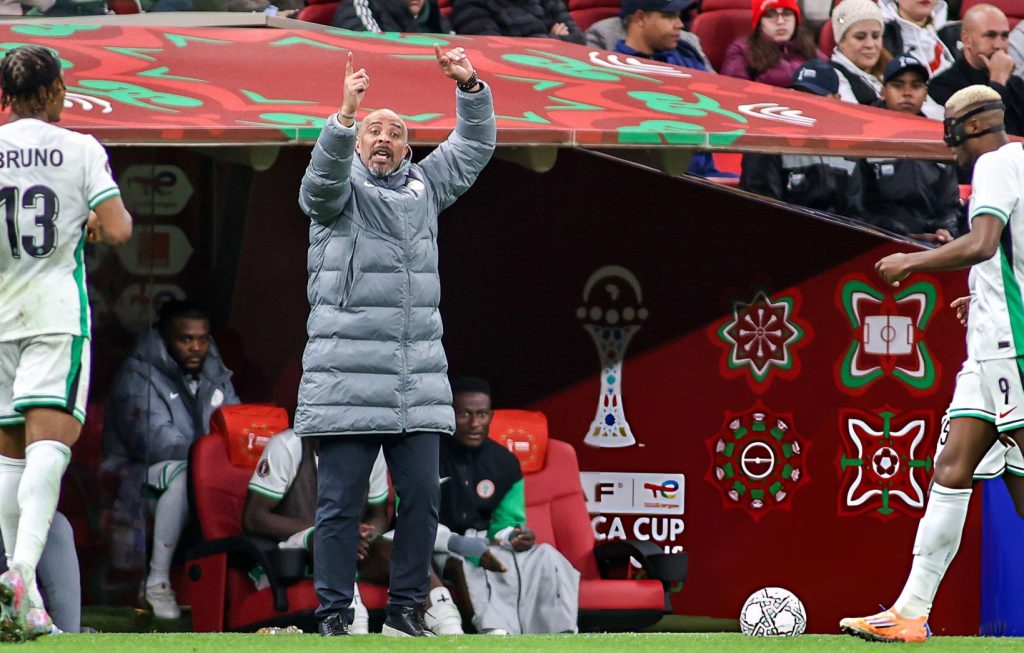
“Losing on Penalties Is Very Painful” – Eric Chelle Reacts
After the match, Super Eagles head coach Eric Chelle praised his players’ mentality but admitted the performance fell short of Nigeria’s usual technical standards.
“The match was never easy, but the players showed a strong mental response and fought for every ball.”
“Losing on penalties is very painful. It’s difficult because we worked hard throughout the entire tournament, but that’s football.”
“We must continue working.”
“We played this match with high pressing, because if you don’t press, you leave spaces and the situation becomes very complicated.”
“From a technical point of view, we were not at the same level we showed in other matches.”
“I don’t want to say the reason was fatigue, but the truth is that we lacked movement and power.”
What Next for Nigeria’s Super Eagles
For Nigeria, hopes of reaching a second consecutive AFCON final were dashed.
However, the Super Eagles still have the opportunity to equal Ivory Coast’s AFCON goal record of 16 when they face Egypt in the third-place play-off on Saturday in Casablanca.