

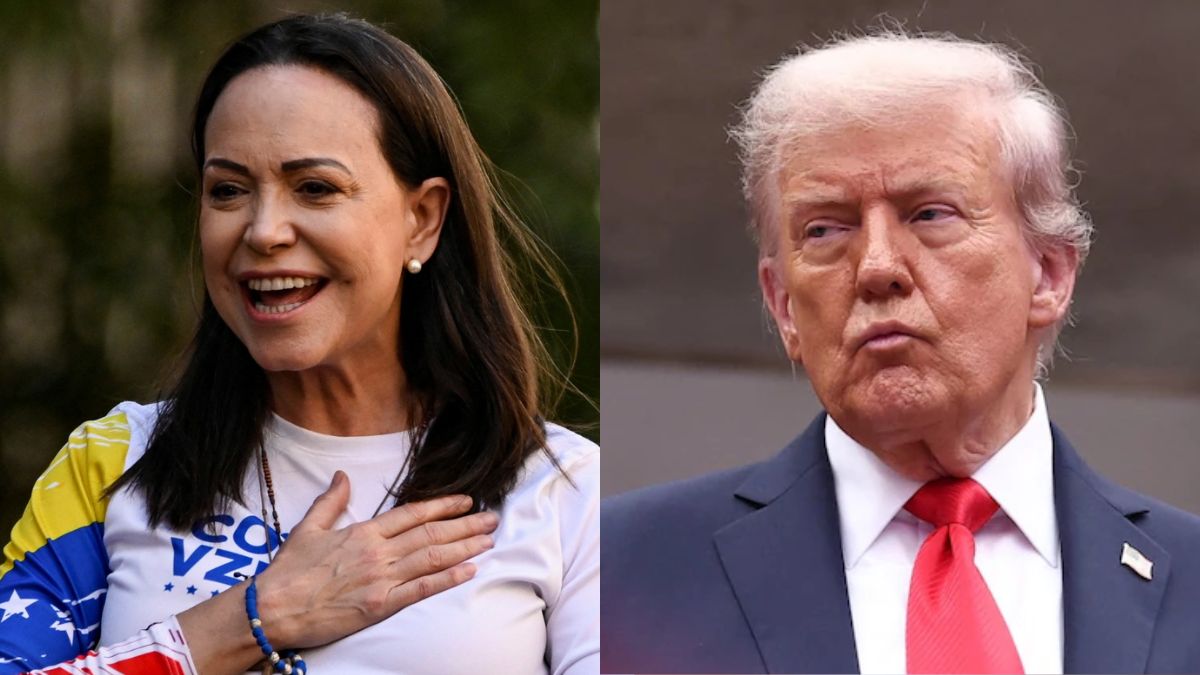
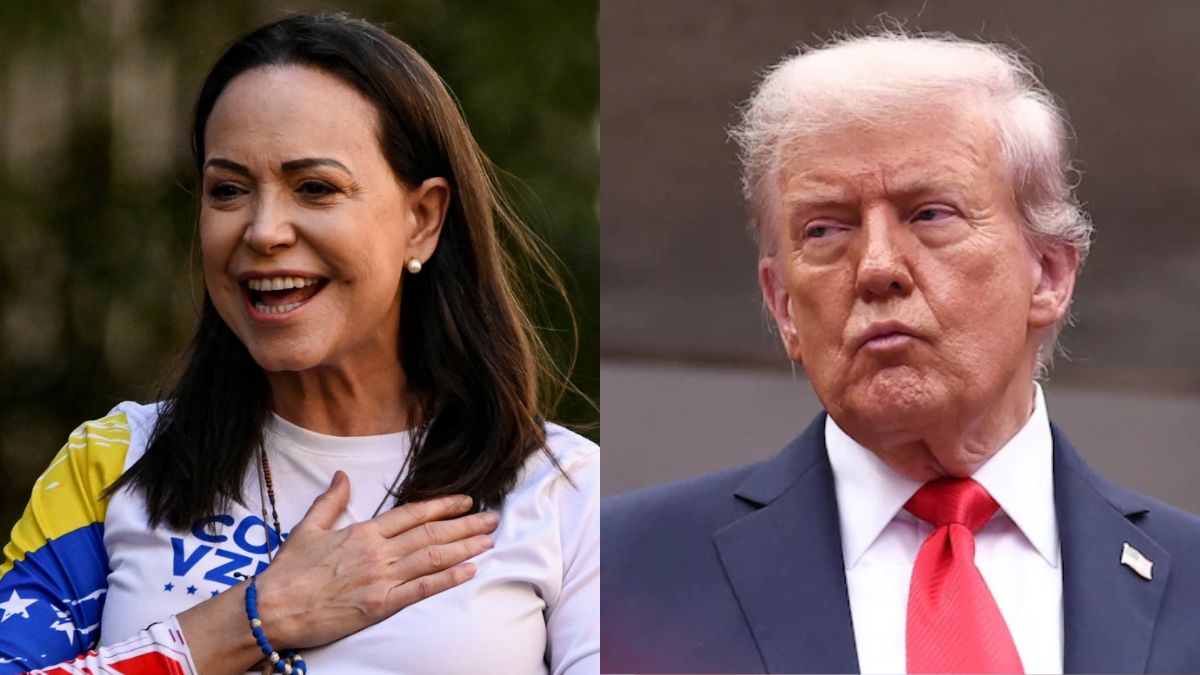
Venezuelan opposition leader María Corina Machado, the 2025 Nobel Peace Prize winner, is scheduled to meet with US President Donald Trump at the White House on Thursday, according to a senior administration official.
The visit comes amid lingering uncertainty over Machado’s political future following recent US military strikes in Caracas and the capture of Venezuela’s longtime leader, Nicolás Maduro. Maduro’s vice president, Delcy Rodríguez, has since been sworn in as acting president.
In the aftermath of the January 3 operation, Trump declined to endorse Machado as Venezuela’s leader, saying it would be difficult for her to govern because she lacked sufficient public support and respect within the country.
Machado, however, holds a distinction Trump has long sought, a Nobel Peace Prize. She has suggested she would be willing to offer the award to the US president, a gesture Trump has described as an “honor,” though the Norwegian Nobel Institute has stated that Nobel Prizes cannot be transferred.
When asked whether receiving Machado’s prize would prompt him to reconsider her role in Venezuela, Trump did not give a direct answer.
“I’m going to have to speak to her. She might be involved in some aspect of it. I will have to speak to her. I think it’s very nice that she wants to come in, and that’s what I understand the reason is,” Trump said during a White House meeting with oil executives.
“I can’t think of anybody in history that should get the Nobel Prize more than me. And I don’t want to be bragging, but nobody else settled wars,” he added.
Trump has also signaled openness to meeting Rodríguez in the future.
“We’re working along really well with the leadership, and we’ll see how it all works out,” he told reporters aboard Air Force One.
Last week, Trump announced that he had canceled a second wave of attacks on Venezuela, citing the country’s cooperation with the United States and its release of political prisoners. He later described Venezuela as an ally “right now,” while reiterating that further military action was unnecessary.
The president has suggested that US involvement in Venezuela could last for years, telling The New York Times, “Only time will tell.”
However, his efforts to court oil companies as part of a broader plan to expand drilling and rebuild Venezuela’s energy sector have met resistance. Executives have raised concerns about the country’s long-term stability, and no major investment commitments emerged from a recent White House meeting, with ExxonMobil’s chief executive reportedly describing Venezuela as “uninvestible.”