

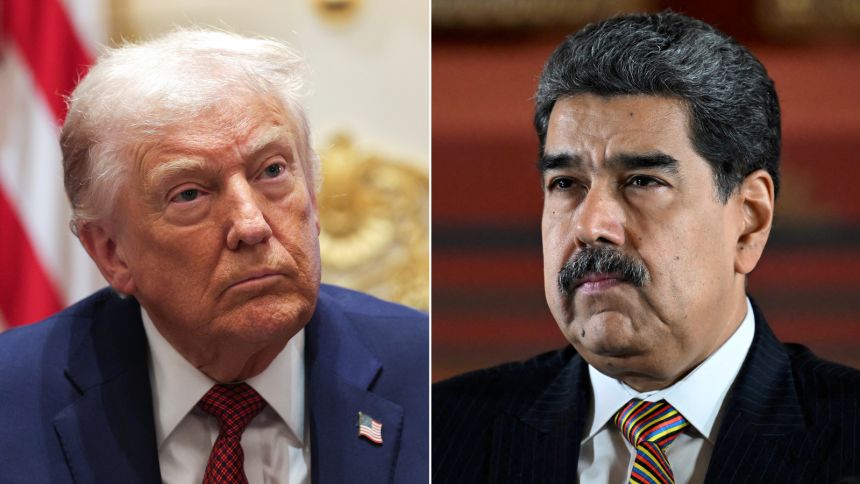

President Donald Trump said he watched live as US forces captured Nicolás Maduro, describing the operation as fast, violent, and unprecedented.
In a phone interview with Fox News on Saturday, January 3, Trump said, “I’ve never seen anything like this. I was able to watch it in real time… literally like I was watching a television show.” He added that no US troops were killed during the raid, although a few were injured and later returned in good condition.
Trump said Maduro and his wife were taken to a ship and would be transported to New York to face drug and terrorism charges. Speaking from his Mar a Lago residence in Florida, he claimed he had spoken to Maduro a week earlier and urged him to surrender.
Describing the operation in detail, Trump said US forces launched airstrikes before special units stormed what he called a heavily guarded fortress. “It had steel doors… he was trying to get into a safety space, but he got bum rushed so fast he didn’t make it,” Trump said, adding that blowtorches were prepared but not needed.
He said the operation was approved four days earlier but delayed due to weather conditions. Trump framed the raid as a warning to other countries, saying it showed the United States was “not going to be pushed around anymore,” and cautioned Mexico to intensify its fight against drug traffickers.
US Vice President JD Vance defended the move, saying on X, “You don’t get to avoid justice for drug trafficking in the United States because you live in a palace in Caracas.”
Attorney General Pam Bondi confirmed that Maduro and his wife, Cilia Flores, face charges in the Southern District of New York, including narco terrorism conspiracy and cocaine importation. “They will soon face the full wrath of American justice on American soil,” she said.
The operation has sparked legal debate. Retired US Air Force Colonel Cedric Leighton said claims that the raid was purely to protect law enforcement were “definitely a stretch,” noting that the removal of a sitting head of state carries major international law implications, though he acknowledged historical precedent such as the 1989 capture of Manuel Noriega in Panama.
Despite the strikes and arrests, Trump has continued to describe himself as a “peace president.” Asked about his New Year resolution for 2026, he replied, “Peace on Earth.”